Blogia

Terrae Antiqvae

Un descubrimiento arqueológico en Grecia reúne a Zeus y Hera

Hera Monte Olimpo

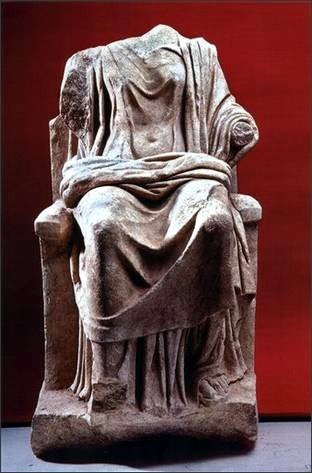
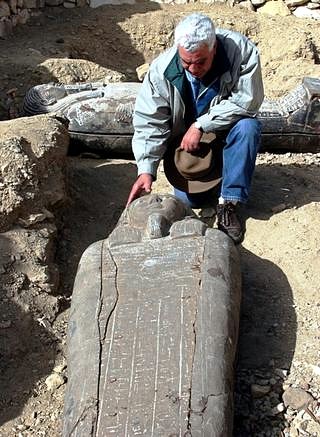
The headless, marble statue of the ancient Greek goddess Hera dates back to the 2nd century B.C. and was discovered last year during excavations in the town of Dion, near Mt Olympus in northern Greece. Photo: AP

El profesor Dimitris Pantermalis, afirma que la escultura es del siglo II a.c. y es la parte que faltaba de una excepcional doble estatua que adornaba el antiguo templo de Zeus.

Salónica, Grecia.- Un equipo de arqueólogos descubrió cerca del Monte Olimpo una escultura de Hera, diosa del matrimonio en la mitología griega, que -junto a una estatua de Zeus hallada recientemente- permitiría constituir la primera pareja de deidades en la historia de Grecia, informó AFP.

La estatua de Hera, sin cabeza y de talla humana, es del siglo II AC. Fue descubierta en un muro defensivo, en Dion, un santuario religioso situado en el norte del país, muy importante durante la civilización macedónica. "Es posible que (el conjunto) incluyera la estatua de Atena", afirmó el arqueólogo Dimitris Pantermalis, en la presentación oficial del hallazgo el viernes en la ciudad de Salonica.

La estatua de Hera, según los especialistas, tiene las mismas dimensiones y el mismo estilo que una escultura de Zeus, hallada en el mismo lugar en 2003. La mitología griega recoge numerosas historias entre Zeus y Hera. Dion, situada en las laderas del Monte Olimpo, cuna de las divinidades griegas, fue una antigua ciudad fortificada y un centro religioso muy importante durante la civilización macedónica, entre el período griego y romano.

Excavaciones anteriores habían permitido descubrir dos teatros, un estadio y varias partes relacionadas con una gran variedad de dioses, como las divinidades egipcias Sarapis, Isis y Anubis, cuya influencia en el mundo griego aumentó durante la conquista de Alejandro el Grande.

Fuente: El Universal, 2 de marzo de 2007
Enlace: http://deportes.eluniversal.com/
2007/03/02/ten_ava_02A840601.shtml


Greek archaeologists find Hera statue

Headless marble statue found in a city under Mount Olympus

By Costas Kantouris

THESSALONIKI, Greece - A 2,200-year-old statue of the goddess Hera has been found built into the walls of a city under Mount Olympus, home of Greece’s ancient gods, archaeologists said on Thursday. The headless marble statue was discovered last year during excavations in the ruins of ancient Dion, some 53 miles southwest of Thessaloniki.

Archaeologist Dimitris Pantermalis said the life-sized — by human dimensions — statue had been used by the early Christian inhabitants of Dion as filling for a defensive wall.

He said the 2nd century B.C. find appeared to have originally stood in a temple of Zeus, head of the ancient Greek gods — whose statue was found in the building’s ruins in 2003 and after whom Dion was named.

"We have reached the conclusion that the statue of Hera stood next to that of Zeus in the temple," said Pantermalis, a Thessaloniki University professor who has headed excavations at Dion for more than three decades.

Hera was the long-suffering wife of Zeus, a notorious philanderer, according to ancient mythology.

"The statue represents a female form seated on a throne, and is made of thick-grained marble like the one of Zeus," Pantermalis said. "It shows exactly the same technique and size, which led us to link the two statues beyond doubt."

Pantermalis said that, if confirmed, it would be the first time two statues of different gods have been located from a single temple in Greece. He said it was also possible that a statue of Athena, goddess of wisdom, could have stood in the temple of Zeus, and expressed hopes it might be discovered during future excavations.

Dion was a major religious center of the ancient Macedonians. Alexander the Great offered sacrifices there before launching his victorious campaign against the Persian Empire in the 4th century B.C.

Excavations so far have revealed temples, theaters and a stadium, city walls, a hotel, baths and streets with an elaborate drainage system, as well as many statues.

The area was first inhabited during the Iron Age, and survived into early Christian times when it was the seat of a bishop.

Pantermalis will present the find on Friday, during a three-day archaeological conference that opened in Thessaloniki Thursday.

The Associated Press, March 1, 2007

Source: http://www.msnbc.msn.com/id/17406301/

Chankillo. Unas torres de piedra forman el observatorio más antiguo en Perú

Chankillo 000

La construcción revela que el conocimiento de la astronomía existía en la región desde antes del Imperio Inca. REUTERS

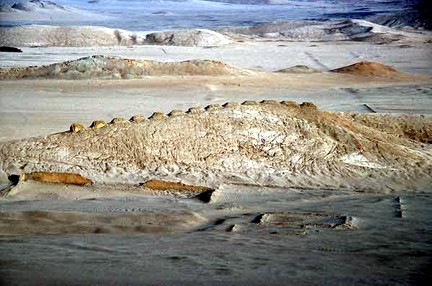
Un grupo de 13 torres de piedra que coronan la ladera de una montaña costera en Perú forman el observatorio solar más antiguo del hemisferio occidental, dijeron el jueves investigadores.

El emplazamiento de 2.300 años de antigüedad remite a una sofisticada cultura que usó el espectacular alineamiento del sol y las estructuras para efectos políticos y ceremoniales, agregaron.

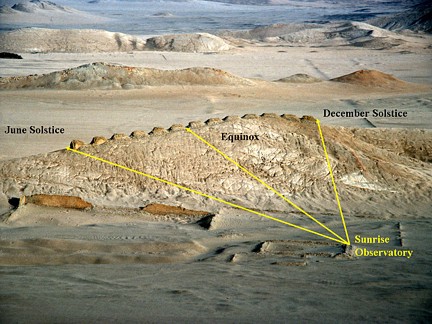
El lugar, denominado las Trece Torres de Chankillo, abarca con precisión los arcos anuales de salida y puesta del sol, cuando se les ve desde dos puntos de observación especialmente construidos para tal fin.

"Miles de personas podrían haberse reunido para observar impresionantes eventos solares. Estos acontecimientos podrían haber sido manipulados por una agenda política", dijo Ivan Ghezzi, quien hizo el descubrimiento mientras era estudiante de la Universidad de Yale.

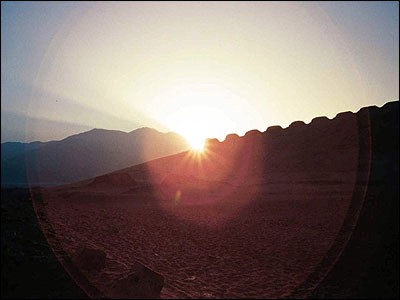
Por ejemplo, durante la época del solsticio de verano en junio, el día más largo del año, el sol sale justo a la izquierda de la torre más septentrional, explicó Ghezzi, que ahora es el director arqueológico del Instituto Nacional de Cultura de Perú, en una entrevista telefónica.

Chankillo es un extenso centro ceremonial de varios kilómetros cuadrados. Tiene una estructura bien fortificada en la cima de la colina, gruesos muros y parapetos.

Pero nadie había entendido la presencia de una hilera de torres a lo largo de 300 metros, colocadas en una colina cercana, como espinas en la espalda de un dragón.

En un artículo en la revista "Science", Ghezzi y sus colegas dijeron que lo comprendieron.

"Desde el siglo XIX se especulaba con que la fila de 13 torres podría ser una demarcación lunar, pero nadie siguió esa pista", dijo Ghezzi, quien decidió probar la idea mientras estudiaba estructuras militares en el lugar, que datan del siglo IV antes de Cristo.

Ghezzi afirmó que se sabe muy poco sobre la gente que construyó Chankillo, pero habrían precedido a los Incas por varios siglos.

Al investigador no le sorprendió el hallazgo de un observatorio tan antiguo y afirma que Perú es una de las fronteras arqueológicas inexploradas en el mundo.

"Esta clase de conocimiento es esencial para la supervivencia, para navegar, para seguir animales y regresar a tu lugar de origen, para hacer un seguimiento de las estaciones", sostuvo Ghezzi.

"Tenemos que encontrar otras razones para explicar por qué un grupo de personas llegó tan lejos como para construir torres monumentales en la cima de una colina", concluyó.

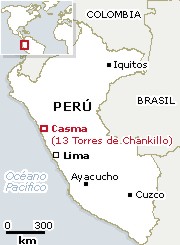
Chanquillo mapa
Mapa de situación (El Mundo.es)

Existen muchas evidencias que demuestran que los Incas usaron los movimientos del sol para demostraciones de poder con fines políticos.

Fuente: Maggie Fox / Reuters, 2 de febrero de 2007
Enlace: http://www.lagaceta.com.ar/
vernota.asp?id_seccion=10&id_nota=196321


Chankillo 002

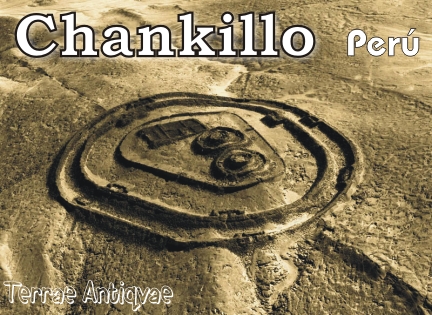
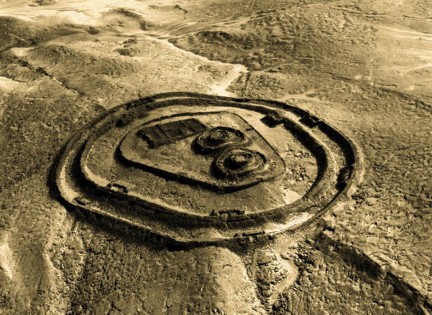
El observatorio está formado por trece torres levantadas en línea, de norte a sur, sobre la cima del monte Chankillo. REUTERS /The fortified stone temple at Chankillo. Credit: National Aerial Service, Peru / COURTESY IVAN GHEZZI

Chankillo 004

ANCIENT SOLAR OBSERVATORY: The thirteen towers of Chankillo may constitute the oldest solar observatory in the Americas. Standing atop a hill in coastal Peru, the 2,300-year-old citadel is evidence that Sun cults predated the Incas by two millennia, researchers report in this week’s Science. When viewed from two observation points, the towers measure the annual rising and setting arcs of the sun with near-perfect accuracy.

Chankillo 003

This image released by Yale University shows a diagram superimposed over what archaeologist from Yale and the University of Leicester claim is the earliest observatory in the Americas with alignments covering the entire year. The diagram shows how the observatory might have been used. Ivan Ghezzi from the Anthropology Department at Yale, lead author of a paper in Science magazine, writes that the 2,300-year-old site in Chankillo, Peru, predates the European conquest of the Americas by 1,800 years and similar construction by the Mayan by 500 years.(AFP-HO) COURTESY IVAN GHEZZI


(2) Peru ruins remains of 2,300-year-old solar observatory: study

Thu Mar 1, 7:46 PM ET

WASHINGTON (AFP) - Thirteen towers aligned on a hill in Peru are the remains of a 2,300-year-old solar observatory and calendar, which pre-dates even the Inca civilization, according to a study published Thursday.

Chankillo 001

The fortified stone temple at Chankillo. Credit: Courtesy of Peru’s National Aerophotographic Service (SAN) COURTESY IVAN GHEZZI

The walled, hilltop Chankillo ruins, some 400 kilometers (250 miles) north of Lima, have long puzzled scientists, says the study published in the March 2 edition of the US review Science.

But Peruvian archeologist Ivan Ghezzi and his British colleague Clive Ruggles now believe that the sequence of towers erected between 200 and 300 BC "marked the summer and winter solstices" and that Chankillo "was in part a solar observatory."

The towers "are built north-to-south on a hill in the center of the complex. Sites to the east and west are adorned with known relics of sacrificial material and were likely observing locations.

"From these sites, the towers mark the annual rising and setting arcs of the sun. They also serve as a calendar accurate to within a few days," Science reported.

The towers were evidence of earlier sophisticated sun cults than the Incans which were known to be carrying out studies of the sun some 1,500 years ago, it added.

Source: http://news.yahoo.com/s/afp/20070302/sc_afp/
usarcheologyperu_070302004636;_
ylt=Agdzjgy9XmON.7kd5WBRTdsTO7gF


(3) Peruvian citadel is site of earliest ancient solar observatory in the Americas

Archeologists from Yale and the University of Leicester have identified an ancient solar observatory at Chankillo, Peru as the oldest in the Americas with alignments covering the entire solar year, according to an article in the March 2 issue of Science.

Recorded accounts from the 16th century A.D. detail practices of state-regulated sun worship during Inca times, and related social and cosmological beliefs. These speak of towers being used to mark the rising or setting position of the sun at certain times in the year, but no trace of the towers has ever been found. This paper reports the earliest structures that support those writings.

At Chankillo, not only were there towers marking the sun’s position throughout the year, but they remain in place, and the site was constructed much earlier – in approximately the 4th century B.C.

"Archaeological research in Peru is constantly pushing back the origins of civilization in the Americas," said Ivan Ghezzi, a graduate student in the department of Anthropology at Yale University and lead author of the paper. "In this case, the 2,300 year old solar observatory at Chankillo is the earliest such structure identified and unlike all other sites contains alignments that cover the entire solar year. It predates the European conquests by 1,800 years and even precedes, by about 500 years, the monuments of similar purpose constructed by the Mayans in Central America."

Chankillo is a large ceremonial center covering several square kilometers in the costal Peruvian desert. It was better known in the past for a heavily fortified hilltop structure with massive walls, restricted gates, and parapets. For many years, there has been a controversy as to whether this part of Chankillo was a fort or a ceremonial center. But the purpose of a 300meter long line of Thirteen Towers lying along a small hill nearby had remained a mystery..

The new evidence now identifies it as a solar observatory. When viewed from two specially constructed observing points, the thirteen towers are strikingly visible on the horizon, resembling large prehistoric teeth. Around the observing points are spaces where artifacts indicate that ritual gatherings were held.

The current report offers strong evidence for an additional use of the site at Chankillo — as a solar observatory. It is remarkable as the earliest known complete solar observatory in the Americas that defines all the major aspects of the solar year.

"Focusing on the Andes and the Incan empire, we have known for decades from archeological artifacts and documents that they practiced what is called solar horizon astronomy, which uses the rising and setting positions of the sun in the horizon to determine the time of the year," said Ghezzi. "We knew that Inca practices of astronomy were very sophisticated and that they used buildings as a form of "landscape timekeeping" to mark the positions of the sun on key dates of the year, but we did not know that these practices were so old."

According to archival texts, "sun pillars" standing on the horizon near Cusco were used to mark planting times and regulate seasonal observances, but have vanished and their precise location remains unknown. In this report, the model of Inca astronomy, based almost exclusively in the texts, is fleshed out with a wealth of archaeological and archaeo-astronomical evidence.

Ghezzi was originally working at the site as a Yale graduate student conducting thesis work on ancient warfare in the region, with a focus on the fortress at the site.

Noting the configuration of 13 monuments, in 2001, Ghezzi wondered about a proposed relationship to astronomy. "Since the 19th century there was speculation that the 13-tower array could be solar or lunar demarcation — but no one followed up on it," Ghezzi said. "We were there. We had extraordinary support from the Peruvian Government, Earthwatch and Yale University. So we said, ’Let’s study it while we are here!’"

To his great surprise, within hours they had measurements indicating that one tower aligned with the June solstice and another with the December solstice. But, it took several years of fieldwork to date the structures and demonstrate the intentionality of the alignments. In 2005, Ghezzi connected with co-author Clive Ruggles, a leading British authority on archeoastronomy. Ruggles was immediately impressed with the monument structures.

"I am used to being disappointed when visiting places people claim to be ancient astronomical observatories." said Ruggles. "Since everything must point somewhere and there are a great many promising astronomical targets, the evidence — when you look at it objectively — turns out all too often to be completely unconvincing."

"Chankillo, on the other hand, provided a complete set of horizon markers — the Thirteen Towers — and two unique and indisputable observation points," Ruggles said. "The fact that, as seen from these two points, the towers just span the solar rising and setting arcs provides the clearest possible indication that they were built specifically to facilitate sunrise and sunset observations throughout the seasonal year."

What they found at Chankillo was much more than the archival records had indicated. "Chankillo reflects well-developed astronomical principles, which suggests the original forms of astronomy must be quite older," said Ghezzi, who is also the is Director of Archaeology of the National Institute of Culture in Lima, Peru.

The researchers also knew that Inca astronomical practices in much later times were intimately linked to the political operations of the Inca king, who considered himself an offspring of the sun. Finding this observatory revealed a much older precursor where calendrical observances may well have helped to support the social and political hierarchy. They suggest that this is the earliest unequivocal evidence, not only in the Andes but in all the Americas, of a monument built to track the movement of the sun throughout the year as part of a cultural landscape.

According to the authors, these monuments were statements about how the society was organized; about who had power, and who did not. The people who controlled these monuments "controlled" the movement of the sun. The authors pose that this knowledge could have been translated into the very powerful political and ideological statement, "See, I control the sun!"

"This study brings a new significance to an old site," said Richard Burger, Chairman of Archeological Studies at Yale and Ghezzi’s graduate mentor. "It is a wonderful discovery and an important milestone in Andean observations of this site that people have been arguing over for a hundred years."

"Chankillo is one of the most exciting archaeoastronomical sites I have come across," said Ruggles. "It seems extraordinary that an ancient astronomical device as clear as this could have remained undiscovered for so long."

Source: Yale University


Chankillo Observatory, Peru

Chankillo Perú vista satelite NASA

Click here to view full image (3387 kb)

About 400 kilometers (250 miles) north of Lima, Peru, lies an enigmatic, 2,300-year-old ruin named Chankillo. Archaeologists have nicknamed the ruin’s central complex the “Norelco ruin” based on its resemblance to a modern electric shaver. The building’s true purpose long eluded them. Its thick walls and hilltop location suggested it was a fort, but why, researchers wondered, would anybody build a fort with so many gates and without a water source? Then in March 2007, two researchers, Ivan Ghezzi and Clive Ruggles, offered an explanation for the complex: at least part of it was a solar observatory.

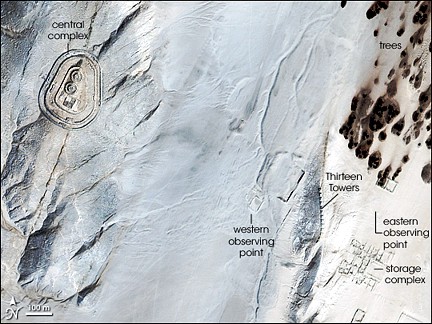
GeoEye’s IKONOS sensor captured this image of Chankillo on January 13, 2002, and this picture shows the features the archaeologists studied to infer the site’s purpose. The central complex appears in the upper left with its concentric rings of fortified walls. Southeast of the central complex are the Thirteen Towers, which vaguely resemble a slightly curved spine. On either side of the towers are observing points (little is left of the eastern observation structure), and south of the eastern observing point is another building complex, apparently used in part for food storage. Although the dark shapes in the northeast seem like rock outcrops, the higher-resolution image reveals they are probably trees.

The Thirteen Towers were the key to the scientists conclusion that the site was a solar observatory. These regularly spaced towers line up along a hill, separated by about 5 meters (16 feet). The towers are easily seen from Chankillo’s central complex, but the views of these towers from the eastern and western observing points are especially illuminating. These viewpoints are situated so that, on the winter and summer solstices, the sunrises and sunsets line up with the towers at either end of the line. Other solar events, such as the rising and setting of the Sun at the mid-points between the solstices, were aligned with different towers.

Why did the ancient inhabitants of this region cultivate such a thorough understanding of solar cycles? In addition to potential ceremonial purposes, the observatory may have had practical uses as well. In Peru’s dry coastal reason, precipitation is seasonal, so a reliable solar calendar would help determine the optimal time to plant crops.

Further reading:
Mann, C. C. (2007). Mystery Towers in Peru Are an Ancient Solar Calendar. Science. 315: 1206-1207.
Ghezzi, I., and Ruggles, C. (2007). Chankillo: A 2300-Year-Old Solar Observatory in Coastal Peru. Science. 315: 1239-1243. Image copyright GeoEye/SIME.

Link: http://earthobservatory.nasa.gov/Newsroom
/NewImages/images.php3?img_id=17620

Las prostitutas o

mexico expo Diosas y Mortales 00

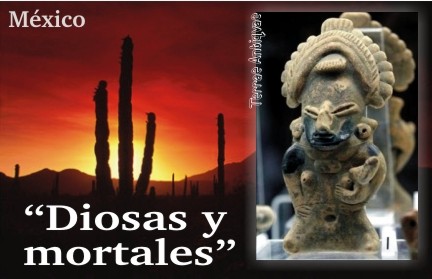
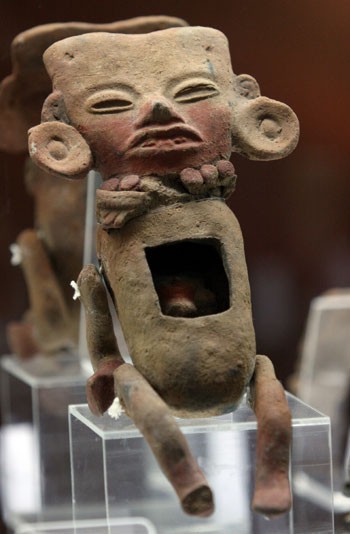
Las "tlatlamiani" o "alegradoras", mujeres que ejercían la prostitución en el México prehispánico, no sufrían discriminación pues se las consideraba "respetables porque cumplían una labor dentro de su comunidad", aseguró hoy un especialista en arqueología.

La más famosa entre ellas fue quizás Marina, también conocida como "La Malinche", la mujer que fue amante y traductora de Hernán Cortés a su llegada a las costas de Veracruz en 1521, indicó el arqueólogo Eduardo Merlo.

El experto, quien ha realizado diversos estudios sobre la mujer en el México prehispánico y es comisario de la exposición "Diosas y mortales", que se exhibe en el Museo Regional de la ciudad central de Puebla, destaca el papel crucial que tuvieron antaño.

"Las ’alegradoras’ eran muy importantes sobre toda en la guerra, porque acompañaban a los soldados, de esa manera evitaban que violaran o raptaran a las mujeres de los pueblos conquistados. Si lo hacían eran castigados terriblemente, porque para eso llevaban a su contingente", precisó Merlo.

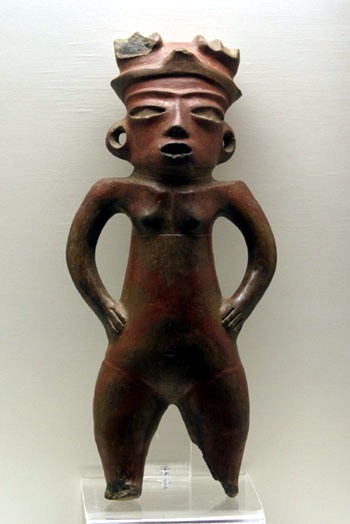
La exposición que ha dirigido, que se exhibe en Puebla, 125 kilómetros al sureste de la capital mexicana, contiene un centenar de piezas entre esculturas, figurillas de barro, joyería e instrumentos de cocina que dan cuenta de la vida cotidiana de las mujeres desde el año 500 antes de Cristo hasta el 1521 de nuestra era, cuando llega Hernán Cortés a México.

Merlo dijo a la prensa que las prostitutas recibían dobles honorarios pues "eran pagadas por el Estado por su servicio y también por los propios usuarios".

El cronista Fray Bernardino de Sahagún las definía en sus escritos como mujeres "que se bañaban todos los días, se vestían elegantes, se adornaban con flores el cabello, se pintaban el cuerpo" y "masticaban su chicle".

"Diosas y mortales", después de exhibirse en Puebla, viajará a los estados mexicanos de Yucatán y Chiapas, y en 2008, a Nuevo México y Nueva York (EEUU).

Merlo señala que las "alegradoras", como las deidades, eran las únicas que usaban sandalias y siempre llevaban el cabello lacio, como se representó en los códices a "La Malinche".

Incluso el muralista mexicano Diego Rivera (1886-1957) la representó en uno de los murales sobre la vida del México prehispánico que se pueden ver en el Palacio Nacional, en la capital del país.

El especialista dijo que las "tlatlamiani", vocablo en lengua náuhatl que quiere decir "la que hace feliz", nunca se casaban, y si alguien les faltaba al respeto podía ser castigado.

Diosas y mortales tlatlamiani xochitecat mujer del pueblo

"Las mujeres del pueblo no las veían mal pero había otras que practicaban la prostitución a escondidas, a las que les llamaban ’huilas’ (palomas), que iban de aquí para allá y eran mal vistas y criticadas. Con las otras eso no ocurría porque abiertamente se dedicaban a eso", detalló.

La exposición también da cuenta de los rituales con los que se preparaban para casarse antaño las mujeres en general.

"Se amarra la tilma (un tipo de ropa) del hombre con el huipil (camiseta) de la mujer en presencia de los ancianos", que les daban consejos sobre lo que deberían hacer, explica Merlo.

"En la alcoba colocaban plumas y un trozo de jade como símbolo de fertilidad", agregó.

Otra peculiaridad de la época es el elevado estatus social de las mujeres que morían dando a luz a sus hijos, un símbolo de buena suerte para la guerra.

"Los guerreros irrumpían en la casa de la muerta para arrancarle el cabello o una extremidad porque era uno de los amuletos de la guerra. Mientras, los familiares se armaban para defender el cuerpo", aseguró.

Otro de los apartados de la exposición muestra las vestimentas, orejeras y collares que usaban las mujeres del México prehispánico y sus distintos peinados.

Las que se rizaban el cabello "lo hacían con piedras calientes" con la pretensión de verse más hermosas, pues el cabello ondulado no existía en las razas de entonces, hasta la llegada de los esclavos negros de África siglos más tarde.

Diosas y mortales Diosa del Maiz

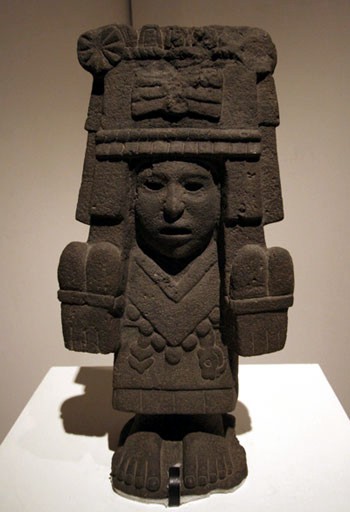
Un apartado de la exposición está dedicado a la diosa del maíz Centeotl o Tonantzin, que era la que les daba de comer, a Chalchiuhtlicue, diosa del agua que brota de la tierra, Tlazolteotl, la diosa de la sexualidad , y la diosa de las flores y la belleza, Xochiquetzal.

Fuente: EFE, Puebla (México), 23 de febrero de 2007
Enlace: http://es.news.yahoo.com/23022007/185/prostitutas
-tlatlamiani-mujeres-respetables-mexico-prehispanico.html

(2) DEIDAD PREHISPANICA QUE AMPARABA LA PROSTITUCION EN EXPOSICION MEXICANA

Una deidad prehispánica que perdonaba los excesos sexuales y amparaba a la prostitución como un oficio necesario, es exhibida en un museo del estado mexicano de Puebla (centro) como parte de la exposición "Diosas y mortales".

"La diosa del amor carnal, llamada Tlazoltéotl, se comía la inmundicia y los pecados sexuales, es decir, la gente que se excedía sexualmente iba al templo de esta deidad, se confesaba ante ella y salía limpia", relató a la AFP Eduardo Merlo, arqueólogo del Instituto Nacional de Antropología e Historia (INAH).

La exposición, montada en el Museo Regional del INAH en Puebla, pretende, a través de estatuillas y esculturas que datan del año 2.500 antes de nuestra era hasta el 1.521 de nuestra era, mostrar la vida de la mujer indígena antes de la conquista española "porque las deidades femeninas eran muy importantes en ese mundo prehispánico", detalló Merlo.

Diosas y mortales tlatlamiani 01

Además de confeccionar telas y realizar las labores del hogar, las mujeres prehispánicas desempeñaban los oficios de parteras, adivinadoras, médicas, campesinas y prostitutas, llamadas popularmente "auianime o alegradoras".

"En tiempo de paz eran mal vistas por las mujeres, pero en tiempos de guerra eran bien vistas por todos ya que atrás del contingente militar iba el contingente de auianime para darle servicio al Ejército", dijo el especialista.

"Se trataba de algo práctico, si los soldados tenían este servicio no tenían porqué violar a las mujeres de los pueblos conquistados y si alguno lo hacía era ejecutado", explicó.

Para los indígenas prehispánicos la mujer tenía un papel relevante, por eso cada deidad masculina tenía su equivalente femenino.

"Incluso el dios creador Ometéotl era mitad masculino y mitad femenino, lo que es único ya que ninguna cultura en el mundo ha tenido un elemento que encierre lo masculino y lo femenino en una sola potencia", destacó Eduardo Merlo.

Diosas y mortales tlatlamiani 02

El antecedente de la Virgen de Guadalupe, venerada por los mexicanos, es representado por la diosa del maíz, conocida como Chicomecóatl o Tonantzin (nuestra madrecita en náhuatl), "quien tenía su templo en el Tepeyac, el cual fue destruido durante la conquista y ahora a la Virgen de Guadalupe los indígenas la siguen llamando Tonantzin", puntualizó.

En la exposición también se exhiben Cihuacóatl, la diosa madre, Chalchiuhtlicue, la diosa del agua, y Xochiquétzal, la diosa de la belleza.

La muestra compuesta por piezas de una colección particular, así como de los Centros INAH de Puebla (centro) y Veracruz (sureste), podría viajar a Estados Unidos en los próximos meses.

Fuente: AFP / 26/02/2007

Hallan estatua de madera de un escriba y su esposa en la necrópolis de Saqqara de 4500 años de antigüedad

Ka Hay 000 TA

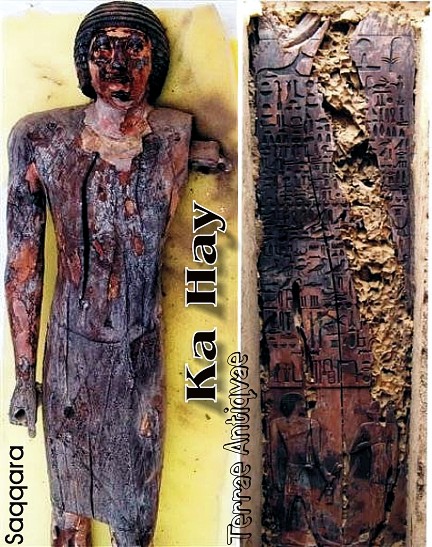
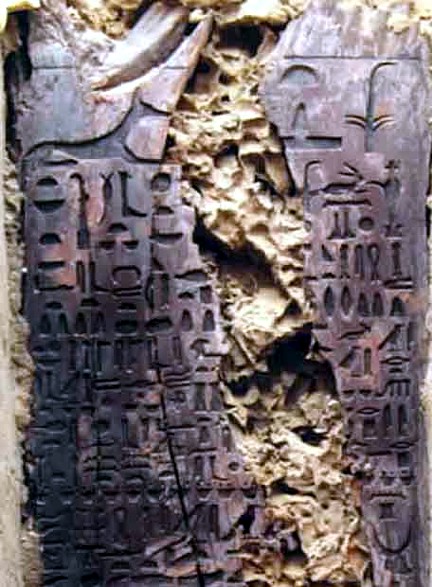
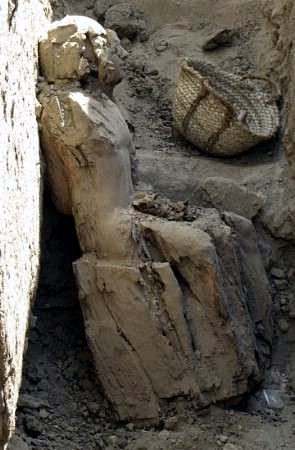
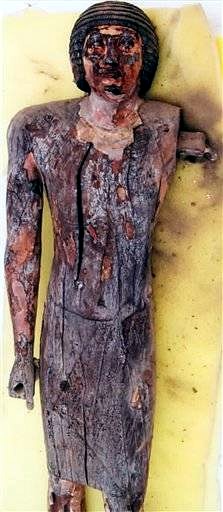
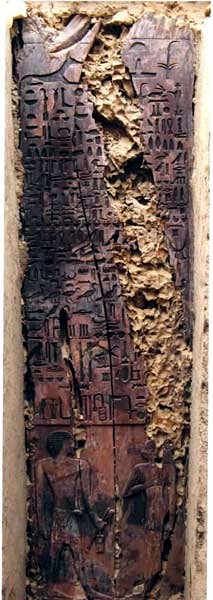
(1) Una rara estatua doble de madera de un antiguo escriba egipcio y su mujer ha sido encontrada en su tumba al sur de El Cairo, dijo el lunes el jefe de los arqueólogos del país. La imagen sin fechar muestra la doble estatua del escriba del antiguo Egipto Ka-Hay, encargado de recoger todo lo relacionado con lo divino, y de su mujer Spri-Ankh. REUTERS/Macquarie University/Handout (EGYPT). (2) - Fotografía cedida por el Consejo Supremo de Detalle de la puerta falsa de madera de la tumba encontrada en Egipto. Foto: EFE

Una rara estatua doble de madera de un antiguo escriba egipcio y su mujer ha sido encontrada en su tumba al sur de El Cairo, dijo el lunes el jefe de los arqueólogos del país.

La estatua doble, que data de cerca del 2.300 a.C., estaba entre un total de cinco imágenes de madera halladas en el sepulcro en Sakkara, la necrópolis de la ciudad de Memphis, dijo Zahi Hawass presidente del Consejo Supremo de Antigüedades.

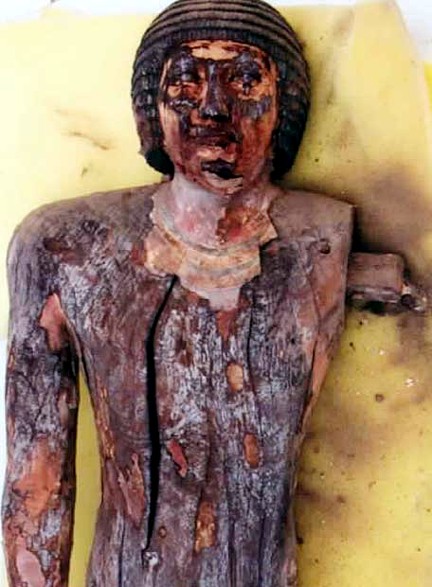
El escriba era Ka-Hay, que registraba lo divino, y su esposa, Spri-Ankh. Vivieron al final de la quinta dinastía o al principio de la sexta y fueron enterrados en la parte de la necrópolis asociada al faraón Teti, señaló en un comunicado.

"Es una estatua única (...) normalmente las estatuas dobles están echas de piedra caliza y raramente talladas en madera", agregó Hawass.

La pieza fue descubierta por un equipo egipcio-australiano.

La tumba es una estructura de ladrillos de barro con el estilo clásico de plataforma y tiene una falsa puerta de madera y dos mesas de ofrendas, añadió. Las puertas falsas eran algo habitual en los sepulcros del periodo.

El equipo arqueológico, liderado ahora por Naguib Kanawati de la Universidad Macquarie de Sydney, ha estado trabajando en Sakkara desde el principio de la década de 1970.

Fuente: Reuters, El Cairo, 20 de febrero de 2007
Enlace: http://es.today.reuters.com/News/newsArticle.aspx?
type=entertainmentNews&storyID=2007-02-20T075947Z_01_
CAR028778_RTRIDST_0_OESEN-ESTATUA-EGIPTO.XML


Ka Hay Saqqara 005 TA

Ka Hay Saqqara 004 TA


(2) Archaeologists find rare wooden statue in Egypt

Ka Hay Saqqara 002 TA

This undated photo released by the Egyptian Supreme Council of Antiquities Monday, Feb. 19, 2006 shows an artifact from a recently discovered mud brick tomb dating back to the late fifth dynasty and early sixth dynasty which was found at the Teti necropolis located to the northern side of Teti pyramid in Saqqara, Egypt. The tomb, which was found by an Egyptian-Australian mission, belonged to Ka-Hay, who kept divine records, and his wife, according to Zahi Hawass, Egypt’s antiquities chief. 11:44 a.m. ET, 2/19/07 (Photo: AP)

A rare double wooden statue of an ancient Egyptian scribe and his wife has been found in their tomb south of Cairo, Egypt’s chief archaeologist said on Monday.

The double statue, dating from around 2300 BC, was among a total of five wooden statues found at the tomb in Sakkara, the necropolis of the ancient Egyptian city of Memphis, said Zahi Hawass, chairman of the Supreme Council of Antiquities.

The official was Ka-Hay, who kept divine records, and his wife, Spri-Ankh. They lived late in the 5th dynasty or early in the 6th and were buried in the part of the necropolis associated with the pharaoh Teti, he said in a statement.

Ka Hay Saqqara 001 TA

"It is a unique statue... In general double seated statues are made of limestone and are rarely carved in wood," he said.

The find was uncovered by an Egyptian-Australian team.

The tomb itself is a mud-brick structure of the classic platform style and contains a fine false door in wood and two tables for offerings, he added. False doors are a regular feature of the tombs of the period.

Ka Hay Saqqara 003 TA

The archaeological team, now led by Naguib Kanawati of Macquarie University in Sydney, has been working at Sakkara since the early 1970s.

Source: Reuters, Cairo, Mon Feb 19, 2007
Link: http://www.archaeologynews.org/story.asp?ID=169102&
Title=Archaeologists%20find%20rare%20wooden%20statue%20in%20Egypt

Ptah EmWia 01ta

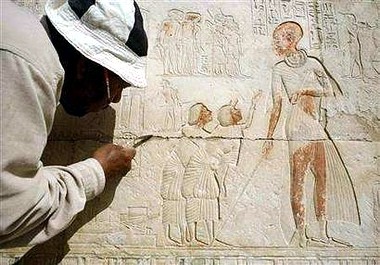
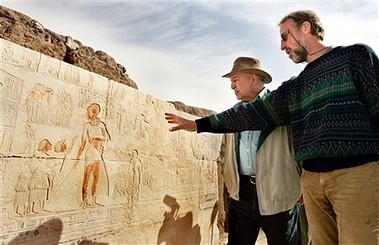
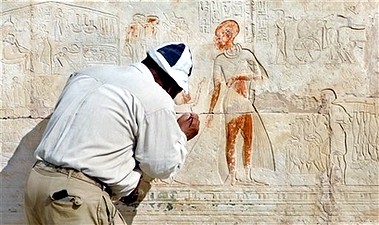
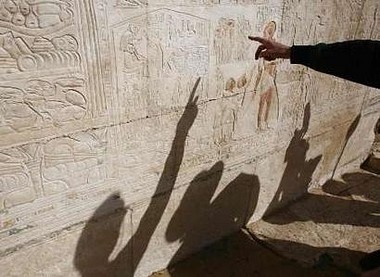
1.- An Egyptian archaeologist touches up the seam on a relief showing royal cupbearer or butler Ptah Em-Wia arriving home to greetings from his juniors in the Sakkara necropolis, south of Cairo February 20, 2007. REUTERS/Goran Tomasevic

Ptah EmWia 02ta

2.- Egypt’s antiquities chief, Dr. Zahi Hawass, and Maarten Raven, right, the excavation’s field director and curator at the National Museum of Antiquities in Leiden, Netherlands, inspect engravings on a limestone tomb belonging to a high-ranking royal butler dating back 3,350 years, near the famous Step Pyramid in Saqqara, Egypt Tuesday, Feb. 20, 2007. Archaeologists on Tuesday unveiled ancient tombs bearing intricate hieroglyphics belonging to a butler and a scribe that had remained buried for thousands of years in the sands near Egypt’s oldest pyramid. (AP Photo/Ben Curtis)

Ptah EmWia 03ta

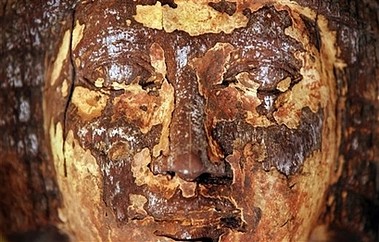
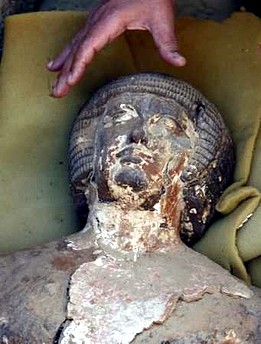
3.- The face of a wooden statue from a more than 4,000-year-old mud brick tomb that belonged to a scribe of divine records and his wife, recently found near the famous Step Pyramid in Saqqara, Egypt and unveiled Tuesday, Feb. 20, 2007. Archaeologists on Tuesday unveiled ancient tombs bearing intricate hieroglyphics belonging to a butler and a scribe that had remained buried for thousands of years in the sands near Egypt’s oldest pyramid. (AP Photo/Ben Curtis)

Ptah EmWia 04ta

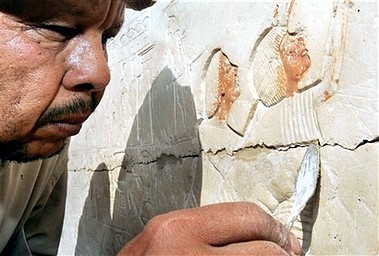
4.- Antiquities restorer Abu al-Hassan Ahmed Hussein works on engravings on a limestone tomb belonging to a high-ranking royal butler dating back 3,350 years, near the famous Step Pyramid in Saqqara, Egypt Tuesday, Feb. 20, 2007. Archaeologists on Tuesday unveiled ancient tombs bearing intricate hieroglyphics belonging to a butler and a scribe that had remained buried for thousands of years in the sands near Egypt’s oldest pyramid. (AP Photo/Ben Curtis)

Ptah EmWia 05ta

5.- Antiquities restorer Abu al-Hassan Ahmed Hussein works on engravings on a limestone tomb belonging to a high-ranking butler royal butler dating back 3,350 years, near the famous Step Pyramid in Saqqara, Egypt Tuesday, Feb. 20, 2007. Archaeologists on Tuesday unveiled ancient tombs bearing intricate hieroglyphics belonging to a butler and a scribe that had remained buried for thousands of years in the sands near Egypt’s oldest pyramid. (AP Photo/Ben Curtis)

Ptah EmWia 06ta

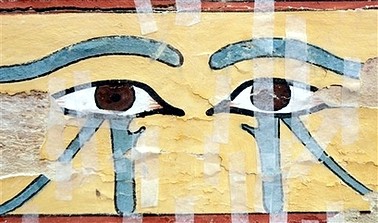
6.- Tape holds together the fragile paintwork on one of two wooden coffins belonging to a priest and his girlfriend, which date back about 4,000 years and were recently found near the famous Step Pyramid in Saqqara, Egypt and unveiled Tuesday, Feb. 20, 2007. Archaeologists on Tuesday unveiled ancient tombs bearing intricate hieroglyphics belonging to a butler and a scribe that had remained buried for thousands of years in the sands near Egypt’s oldest pyramid. (AP Photo/Ben Curtis)

Ptah EmWia 07ta

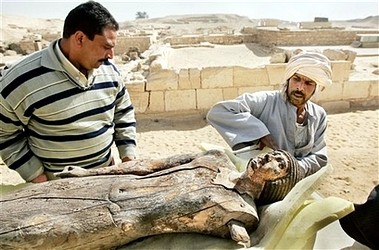
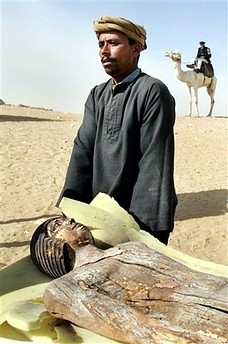
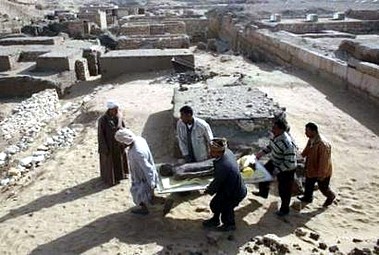
7.- Archaeological workers remove a wooden statue from a more than 4,000-year-old mud brick tomb that belonged to a scribe of divine records and his wife, near the famous Step Pyramid in Saqqara, Egypt Tuesday, Feb. 20, 2007. Archaeologists on Tuesday unveiled ancient tombs bearing intricate hieroglyphics belonging to a butler and a scribe that had remained buried for thousands of years in the sands near Egypt’s oldest pyramid. (AP Photo/Ben Curtis)

Ptah EmWia 08ta

8.- An Egyptian policeman riding a camel looks on as archaeological workers remove a wooden statue from a more than 4,000-year-old mud brick tomb that belonged to a scribe of divine records and his wife, near the famous Step Pyramid in Saqqara, Egypt Tuesday, Feb. 20, 2007. Archaeologists on Tuesday unveiled ancient tombs bearing intricate hieroglyphics belonging to a butler and a scribe that had remained buried for thousands of years in the sands near Egypt’s oldest pyramid. (AP Photo/Ben Curtis)

Ptah EmWia 09ta

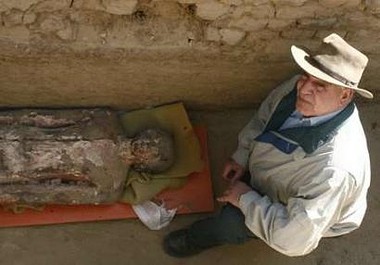
9.- Egypt’s chief archaeologist, Zahi Hawass, examines a wooden statue of the ancient Egyptian scribe Ka-Hay, one of three statues found in a cache in the Sakkara necropolis, south of Cairo February 20, 2007. The statue, discovered recently by an Egyptian-Australian team of archaeologists, dates from about 2200 BC. REUTERS/Goran Tomasevic (EGYPT)

Ptah EmWia 10ta

10.- An Egyptian archaeologist point his finger at a relief showing royal cupbearer or butler Ptah Em-Wia arriving home to greetings from his juniors in the Sakkara necropolis, south of Cairo February 20, 2007. A Dutch mission found Ptah Em-Wia’s tomb in the Sakkara necropolis south of Cairo this year. Dating from about 1300 BC, it is one of the very few tombs in the area from the period of the pharaoh Akhenaten, who promoted a distinctive style of art. REUTERS/Goran Tomasevic (EGYPT)

Ptah EmWia 11ta

11.- Egypt’s chief archaeologist, Zahi Hawass, poses next to a wooden statue of the ancient Egyptian scribe Ka-Hay, one of three statues found in a cache in the Sakkara necropolis, south of Cairo February 20, 2007. The statue, discovered recently by an Egyptian-Australian team of archaeologists, dates from about 2200 BC. REUTERS/Goran Tomasevic (EGYPT)

Ptah EmWia 12ta

12.- Workers carry a wooden statue of the ancient Egyptian scribe Ka-Hay, one of three statues found in a cache in the Sakkara necropolis, south of Cairo February 20, 2007. The statue, discovered recently by an Egyptian-Australian team of archaeologists, dates from about 2200 BC. REUTERS/Goran Tomasevic (EGYPT)

Ptah EmWia 13ta

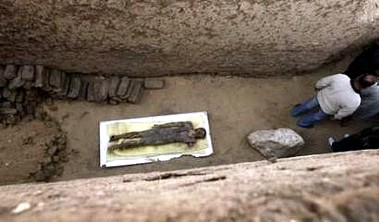
13.- Wooden statues of the ancient Egyptian scribe Ka-Hay, two of three statues found in a cache in the Sakkara necropolis, lie on the ground near the tomb south of Cairo February 20, 2007. The statues, discovered recently by an Egyptian-Australian team of archaeologists, dates from about 2200 BC. REUTERS/Goran Tomasevic (EGYPT)

Ptah EmWia 14ta

14.- A wooden statue of the ancient Egyptian scribe Ka-Hay, one of three statues found in a cache in the Sakkara necropolis lies on the ground in a tomb south of Cairo February 20, 2007. The statue, discovered recently by an Egyptian-Australian team of archaeologists, dates from about 2200 BC. REUTERS/Goran Tomasevic (EGYPT)

Ptah EmWia 15ta

15.- Wooden statues of the ancient Egyptian scribe Ka-Hay, two of three statues found in a cache in the Sakkara necropolis, lie on the ground in a tomb south of Cairo February 20, 2007. The statues, discovered recently by an Egyptian-Australian team of archaeologists, dates from about 2200 BC. REUTERS/Goran Tomasevic (EGYPT)


3,000-year-old tombs are found in Egypt

SAQQARA, Egypt - Archeologists unveiled Tuesday the tombs of a Pharaonic butler and scribe that had been buried in the sand for more than 3,000 years.

The tombs, along with the painted coffins of a priest and his girlfriend, were discovered early this year at Saqqara near the famous Step Pyramid of King Djoser — the oldest of Egypt’s more than 90 pyramids.

"The sands of Saqqara reveal lots of secrets," said Egypt’s antiquities chief, Zahi Hawass, as he showed reporters around a 4,000-year-old tomb of mud bricks that belonged to a scribe of divine records, Ka-Hay, and his wife.

"It doesn’t look great because it was built from mud brick and not built of limestone, but I really believe that this tomb is very important," said Hawass, who was wearing his Indiana Jones-style hat. "This type of tomb could enrich our knowledge about the people who actually surrounded the kings of Saqqara, especially the people who lived 4,200 years ago."

The tomb featured a dark wooden door, which ancient Egyptians believed that the souls of the dead would use to leave their tomb. The door bore engravings in hieroglyphic text and pictures of the scribe and his wife.

South of the Step Pyramid, archeologists unveiled a second tomb, which belonged to a butler who died 3,350 years ago. Carved out of limestone, the tomb contained murals that showed scenes of people performing rituals and monkeys eating fruit. The blue and orange colors of the paint were surprisingly well preserved.

"This is a very, very lively scene," said Maarten Raven, the excavation’s director and a curator at the National Museum of Antiquities in Leiden, Netherlands.

Raven said he believed other tombs from the New Kingdom, similar to the one unveiled Tuesday, had yet to be uncovered in Saqqara, which is famous for Old Kingdom antiquities. Many of the New Kingdom tombs, which date back from 1570 B.C. to 1070 B.C., can be found in the southern Egyptian city of Luxor.

"We hope one day this area will be open to visitors so people can see that Saqqara is not only Old Kingdom but New Kingdom as well," Raven said.

Hawass also unveiled two wooden coffins, 4,000 years old, that were found south of the Step Pyramid. The coffins, painted light orange with blue hieroglyphics, contained human-shaped coffins known as anthropoids, in which lay the mummies of a priest and his girlfriend, Hawass said.

The ancient Egyptians believed anthropoids acted as a substitute body for the dead.

Although archaeologists have been exploring Egypt intensively for more than 150 years, Hawass believes only 30 percent of what lies under the sands at Saqqara has been uncovered.

Saqqara, about 12 miles south of Cairo, hosts a collection of temples, tombs and funerary complexes. Its Step Pyramid is the forerunner of the more sophisticated pyramids in Giza, which are believed to have been built about a century later.

Source: By ANNA JOHNSON, Associated Press Writer
Link: http://news.yahoo.com/s/ap/egypt_
tombs;_ylt=AlTAVc1CR_Y4_7yb.9wl_.PmWMcF

Unos constructores en Atenas descubren un antiguo teatro griego

teatro griego TA 1

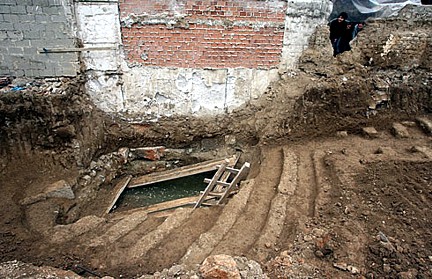
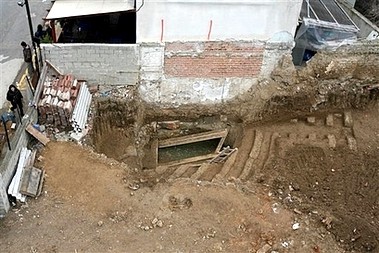
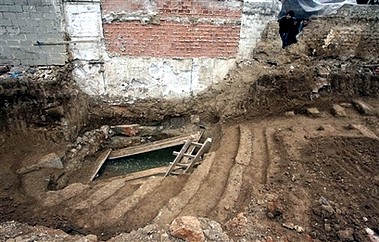
Photo: Sections of an ancient Greek theater are seen after they were discovered on Thursday during construction work. Until now, only two such buildings were known in Athens, where western theater originated more than 2,500 years ago. By Thanassis Stavrakis, AP

Unos constructores se toparon en Atenas con un teatro griego de 2.500 años de antigüedad que los arqueólogos creen que podría haber sido escenario de obras teatrales.

Los arqueólogos que están supervisando la excavación de los cimientos de un edificio en el área de Menidi, conocida en la antigüedad como Acarnia, descubrieron 13 filas de asientos de piedra caliza que probablemente formaban parte de un teatro al aire libre.

"Probablemente es un antiguo teatro del siglo IV a.C. Si tenemos suerte, podremos encontrar artefactos que nos ayudarán a entender exactamente qué era", dijo Vivi Vasilopoulou, director general de antigüedades del Ministerio de Cultura, que inspeccionó el sitio el viernes.

Los arqueólogos dijeron que el teatro puede datar de la era de oro de la antigua dramaturgia griega, cuando se presentaban las obras de Esquilo, Sófocles y Eurípides ante miles de personas.

El antiguo dramaturgo Aristófanes habla sobre Acarnia, hoy un distrito de clase trabajadora a unos 10 kilómetros al norte del centro de Atenas, y sus muchos carboneros, en su comedia "Los acarnienses".

Antiguos escritores mencionan el teatro de Acarnia, pero se necesitan mayores excavaciones para determinar la identidad del teatro que está enterrado parcialmente bajo una calle.

Hay otros seis teatros similares en la provincia de Ática, que incluye Atenas y la región que la rodea.

Tetro Griego Menidi 2 TA

Tetro Griego Menidi 1 TA

Vasilopoulou dijo que es prematuro decir si con el tiempo el teatro será abierto al público.

Fuente: Reuters, Atenas, 17 de Febrero de 2007
Enlace: http://es.today.reuters.com/news/newsArticle.
aspx?type=entertainmentNews&storyID=2007-02-17T103956Z
_01_CAR738386_RTRIDST_0_OESEN-GRECIA-TEATRO.XML


(2) Greek archaeologists discover ancient theater in Athens

Sections of an ancient Greek theater are seen after they were discovered on Thursday during construction work. Until now, only two such buildings were known in Athens, where western theater originated more than 2,500 years ago.

By Nicholas Paphitis, The Associated Press

ATHENS — Sections of an ancient Greek theater were discovered on Thursday during construction work in an Athens suburb, archaeologists said. Until now, only two such buildings were known in the ancient city where western theater originated more than 2,500 years ago.

MapaAetoliaAcarnaniaMENIDI

Menidi vista aérea

Fifteen rows of concentric stone seats have been located so far in the northwestern suburb of Menidi, according to Vivi Vassilopoulou, Greece’s general director of antiquities.

"Another section appears to lie under a nearby road," she told The Associated Press.

"(The remains) were discovered during excavation work, supervised by archaeologists, for a new building," Vassilopoulou said. "But it is still very early to offer any conclusions."

The structure has not yet been dated, and further details are expected to emerge following a full excavation.

Menidi is thought to be built over the ancient village of Acharnae, the largest of a string of rural settlements outside ancient Athens. Ancient writers mention a theater at Acharnae, but no traces of it had been found until now.

The village was linked with Dionysos, the ancient god of theater and wine, as the Athenians believed that ivy — his sacred plant — first grew there.

Built in semicircular tiers on hillsides, ancient theaters were monumental, open-air structures that could seat thousands of spectators.

Theater first emerged as an art form in late 6th century B.C. Athens, where ancient playwrights competed for a prize during the annual festival of Dionysos — in whose cult the art originated.

The works of Sophocles, Aeschylus, Euripides and Aristophanes were performed in the theater of Dionysos under the Acropolis.

Originally a terrace where spectators sat on the bare earth above a circular stage, it was rebuilt in stone during the 4th century B.C. and could sit up to 14,000 people.

Another smaller theater has been discovered in southern Athens.

Source: The Associated Press, 2/16/2007
Link: http://www.usatoday.com/tech/science/
discoveries/2007-02-16-ancient-theater_x.htm

Encuentran una tumba de la época de Akhenatón cerca de El Cairo

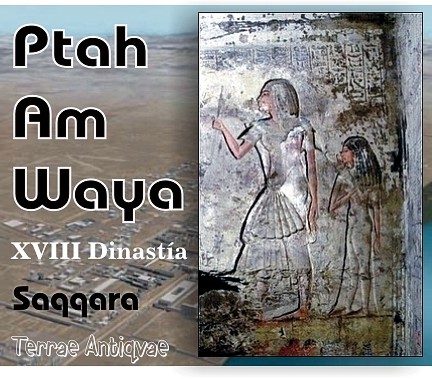
Ptah Am Waya XVIII dinastía

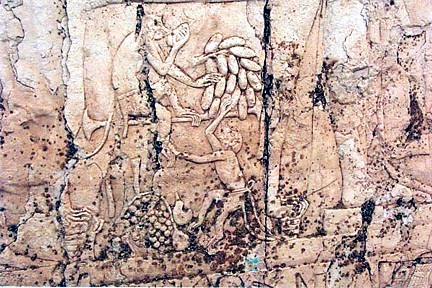
Photo: A detail of a fresco in the tomb of the "Scribe of the Treasure" in Saqqara, south of Cairo. Dutch archaeologists have discovered a tomb in the Saqqara necropolis from the time of Egypt’s monotheistic pharaoh Akhenaton some 3,300 years ago, the Supreme Council of Antiquities has said.(AFP/HO/File)

Un equipo de arqueólogos holandeses ha descubierto una tumba del portador del escudo del faraón Akhenatón, decorada con pinturas que incluyen escenas de monos que recogen y comen frutas, según desvelaron el miércoles autoridades de antigüedades egipcias.

La tumba pertenecía al funcionario llamado Ptah Am Waya, y fue descubierta durante una excavación del equipo holandés en el área de Saqqara, la necrópolis de la ciudad de Menfis, informó la agencia de noticias estatal MENA, que citó a Zahi Hawass, titular del organismo sobre antigüedades.

Akenatón, faraón de la decimoctava dinastía, que gobernó Egipto entre 1379 y 1362 a.C., abandonó la mayoría de los dioses antiguos e intentó imponer una religión monoteísta basada en el culto a Atón, el disco solar.

Construyó una nueva capital llamada Ajetatón, en Tell el Amarna, 250 kilómetros al sur de El Cairo, y el hallazgo demuestra que altas autoridades continuaban construyendo sus tumbas en Menfis, cerca de la capital egipcia.

"Es uno de los hallazgos más importantes en el área de Saqqara, porque se remonta al período de Akhenatón", dijo Hawass, según MENA.

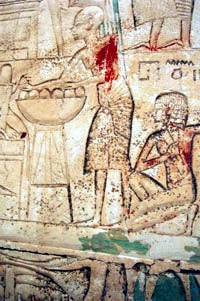
Las autoridades observaron que la tumba tenía paredes de piedra caliza con pinturas de escenas de la vida cotidiana y de Ptah Am Waya recibiendo ofrendas, informó MENA.

"Algunas de las escenas más graciosas (...) son las de varios monos recogiendo y comiendo fruta", dijo Osama el Sheemi, responsable de las antigüedades de Saqqara, de acuerdo con MENA.

El equipo holandés ha estado trabajando en Saqqara desde la década de 1990 para encontrar tumbas que daten del Nuevo Reino. Previamente, habían hallado la tumba de un sacerdote de la era de Akhenatón.

Fuente: Reuters, El Cairo, 15 de febrero de 2007
Enlace: http://es.today.reuters.com/News/newsArticle.
aspx?type=entertainmentNews&storyID=2007-02-15T064744Z_
01_CAR475212_RTRIDST_0_OESEN-EGIPTO-ARQUEOLOGIA-AKENATON.XML


(2) Dutch team finds ’heretic Pharaoh’ era tomb in Egypt

CAIRO (AFP) - Dutch archaeologists have discovered a tomb in the Saqqara necropolis from the time of Egypt’s monotheistic pharaoh Akhenaton some 3,300 years ago, the Supreme Council of Antiquities has said.

The discovery shows that notables contemporary with Akhenaton continued to be buried in Saqqara, just outside the modern day capital of Cairo, indicating the enduring importance of old religious orthodoxy under "the heretic pharaoh".

"The discovery confirms the existence of tombs from important men of state during the time of pharaoh Akhenaton after the same delegation found another tomb from this period several years before," said SCA head Zahi Hawass, who described it as one of the "most important" discoveries in the area.

Pharaoh Akhenaton of the 18th dynasty broke with millennia of ancient Egyptian tradition by insisting on the worship of one god, Aton the sun, instead of many, and left Egypt’s traditional capital to build a new city dedicated to solar worship at Tel Amarna.

The tomb, which bears the royal cartouche for "Ptah Am Waya" is covered with wall paintings done in the realistic style of the period when classic artistic conventions were abandoned.

The wall paintings include those of "Ptah" going to the afterlife as well scenes of daily life, such as monkeys eating dates.

The Dutch team has been working in Saqqara since the 1990s, and focuses on New Kingdom tombs, particularly those from Akhenaton. Previously they discovered the tomb of the Akhenaton-era priest Meri Neet.

Source: AFP, Wed Feb 14, 8:22 AM ET
Link: http://news.yahoo.com/s/afp/20070214/sc_afp/egyptarcha
eology_070214132221;_ylt=Ap29hNNTXt84fZuzwur.BVsTO7gF


Tomb from Akhenaton era discovered

"A tomb dating back to the era of King Akhenation in Pharaonic Egypt had been discovered" Minister of Culture Farouq Hosni carried the good news Wednesday.

The tomb belongs to the holder of the divine seal, "Ptah Om Waya", said Secretary General of the Supreme Council of Antiquities Dr. Zahi Hawwas, noting that it was the most important discovery in the area of Saqqarah.

A Dutch mission unearthed the tomb in excavations around Saqqarah, Dr. Hawwas added.

He made it clear that recent discoveries in the area "made us know for sure tombs of state seniors during Akhenaton’s reign existed".

Born Amenhotep IV, AKhenaton (1372-1355 BC) belongs to the 18th dynasty, a period boasting powerful kings and queens.

Sabri Abdel-Aziz, the head of Pharaonic Monuments Department said the adobe tomb has an open yard and is surrounded by columns.

It has three compartments and limestone walls with scenes representing the deceased and the offerings presented to him.

The Dutch mission has been working in Saqqarah since the 1990s with the aim of finding tombs of the modern dynasty.

Source: ©Egypt State Information Service, Thursday, February 15, 2007
http://www.sis.gov.eg/En/EgyptOnline/
Culture/000001/0203000000000000000720.htm


monos tumba Saqqara TA

Photo: A relief featuring two monkeys playing beneath the chair of the tomb owner’s wife.

Secrets unearthed

Recent discoveries in two different areas of Saqqara shed more light on the history of this great necropolis, reports Nevine El-Aref

To the west of the Serapium, during routine excavations, the Japanese mission from Wasida University discovered five Middle Kingdom shaft-tombs. Removing the sand from one of them they uncovered four splendid painted wooden sarcophagi, the first a "black type" anthropoid sarcophagus with yellow lines and scenes featuring the four sons of Horus decorating two sides.

Zahi Hawass, secretary-general of the Supreme Council of Antiquities (SCA), said early studies suggest the sarcophagus belonged to Wiai, a New kingdom craftsmen’s chief of the house of Amun. "It probably dates from the 18th or early 19th Dynasty."

The three others are Middle Kingdom rectangular painted sarcophagi with eye-panels and false doors, belonging to a Ka-Priest called Sebek-Hat and two mistresses of the house, Keki and Senet-It-Es.

Sakuji Yoshimura, head of the Japanese mission, told Al-Ahram Weekly that the four sarcophagi were found intact and the three dating from the Middle Kingdom are decorated in a style typical of the 12th and 13th dynasties. The decorative scheme and hieroglyphic texts are also similar to those of the sarcophagus of Senu, unearthed two years ago in the same area.

"Such similarity suggests that a sarcophagi workshop specialised in this style of decoration may well have existed in Memphis during the Middle Kingdom," suggests Yoshimura.

As a result of ongoing excavations in the area in recent years the distribution pattern of tombs in the Saqqara cemetery is becoming clearer. Middle Kingdom tombs seem to have a due north orientation and tend to be lined up in clusters. Shaft digging activities were resumed in the New Kingdom at least from the late 18th Dynasty, and continued throughout the 19th.

"The majority of New Kingdom tombs have an east-west axis and were built in the available spaces between Middle Kingdom tombs," says Yoshimura.

Meanwhile, deeper in the desert of Saqqara necropolis, on the eastern side of Meryneith’s tomb, a mission from Leiden Museum and University has unearthed an Amarna tomb decorated with wall paintings. The tomb consists of an open courtyard surrounded by pillars and, to the west, three cult chapels. Limestone revetment has been preserved along both the courtyard’s north and east walls.

According to Maarten J Raven, head of the mission, more relief panels may be hidden under the sand still covering the base of the other walls. The bases of three limestone papyrus columns and one fluted half-column already jut from the sand.

Decorative inscriptions on the tomb walls indicate that it belonged to Ptahemwia, among whose titles are Greatly Praised of the Perfect God, Beloved of the Lord of the Two Lands and Akhenaten’s Seal-Bearer.

The decoration, involving "lively scenes composed of relatively small human figures with peculiar proportions" as Raven wrote in his archaeological report, compare well with almost contemporary reliefs in the nearby tomb of Meryneith, which was likewise started during the early years of Akhenaten’s reign. The reliefs have retained many of their original colours though those on the east wall and the east part of the north wall remain unfinished. Inscriptions reveal that Ptahemwia’s wife Maya was the songstress of the god Amun. On the westernmost part of the tomb’s north wall the couple are depicted seated on chairs receiving offerings from two priests, with relatives standing behind the chairs or else depicted in a lower register.

A relief featuring two monkeys playing beneath the chair of the tomb owner’s wife is, says Hawas, the most vivid depiction found inside the tomb.

Scenes involving Ptahemwia are spread across the tomb’s walls. The most detailed shows Ptahemwia arriving home accompanied by his Nubian guards, charioteer and sandal-bearer. He is greeted by household officials while a servant gestures towards the open door of the house. Indoors, two attendants present a drinking vessel, a water flask and towel. Behind then are two female musicians, one of whom carries a lyre while upstairs his wife Maya is being poured a drink by another servant. To the right of the chariot waiting outside the house is a depiction of an agricultural scene.

Raven believes the tomb will contribute much to our knowledge of Memphis during the Amarna period. Ptahemwia is already known from a pilaster panel in Bologna and a door jamb in the Egyptian Museum.

Source: http://weekly.ahram.org.eg/2007/832/eg8.htm


Holandeses hallan tumba de mayordomo faraónico

Ptahemwia tumba Saqqara

Arqueólogos del Museo Nacional de la Antigüedad, ubicado en la ciudad holandesa de Leiden, han descubierto en Egipto una tumba de 3.300 años de antigüedad. De las inscripciones en ella se deduce que pertenece a Ptahemwia, "servidor de reyes, puro de manos", de la época del famoso faraón Akenatón (1353-1335 A.C.) "Podría decirse que era una especie de mayordomo del faraón, pero sería restarle importancia", dice Maarten Raven, dirigente del equipo holandés de excavación durante una entrevista en la capital egipcia, El Cairo. "En realidad se trataba de un alto cargo en la corte", afirma el especialista.

El hallazgo tuvo lugar en Sakara, un cementerio de la entonces capital egipcia Menfis, la cual, según la tradición, fue fundada 3.000 años antes de Cristo por el rey Menes, el primer faraón del Egipto unificado. El cementerio, donde el equipo holandés realiza excavaciones desde 1975, está situado al sur de El Cairo.

El Consejo Egipcio de la Antigüedad califica este hallazgo como el descubrimiento más importante en la región. "Estamos excavando aquí desde hace 33 años y, en este contexto, no es el principal hallazgo que hayamos hecho, pero sí proporciona información aclaratoria sobre legados en nuestro museo y en otros museos del mundo", informa Raven, quien también trabaja en la conservación de la colección egipcia del Museo de Leiden.

En el siglo XIX se sacaron de Egipto un sinnúmero de objetos antiguos. "Entonces era una afición seria de muchos diplomáticos europeos", cuenta Raven. "Los destinaban tanto a sus colecciones privadas como al comercio. Ahora está prohibido pero, en ese entonces, era completamente legal". Muchas de esas piezas han llegado a museos en todo el mundo sin que se sepa la procedencia exacta. "En base a estos y otros hallazgos podemos determinar qué objetos específicos han pertenecido en algún momento a nuestra colección en Leiden", añade Raven.

El equipo de arqueólogos conocía desde hace varios años la existencia de la tumba, pero antes de trabajar en ella, tenía que concluir los trabajos de restauración de otro hallazgo anterior."Nos habíamos topado con el muro exterior durante la investigación en la tumba del sacerdote mayor Meryneith, del mismo periodo, que descubrimos en el año 2001", informa Raven.

Los arqueólogos sólo pueden realizar excavaciones por siete semanas, durante el invierno europeo. Recién el próximo año el equipo descenderá a las cámaras mortuorias subterráneas. No obstante, Raven no espera hacer ningún descubrimiento espectacular, porque los profanadores de tumbas han dejado sus huellas. "Eso indica que probablemente en el siglo XIX ya había entrado gente en las tumbas, llevándose todo lo que tenía valor", dice Raven. "De todas formas, nos alegra mucho encontrar cualquier resto que hayan dejado".

Según el jefe de la expedición, el nuevo hallazgo es menos espectacular que el del 2001. "Hay menos relieves y menos textos, pero la tumba que acabamos de descubrir significa un importante complemento a la información que ya tenemos".
El complejo funerario, de forma rectangular (10,5 x 16 metros) semeja un templo aislado, con una portalada, un patio interior con columnatas, un foso que conduce a las cámaras fúnebres subterráneas y tres capillas. De la construcción superior del complejo sólo quedan en pie dos metros de los muros más pequeños.

Raven califica de extraño el hecho que una parte de la tumba haya quedado sin acabar. "Quizás porque Ptahemwia falleciera prematuramente o porque hubiera caído en desgracia". Los paneles de relieve restantes contienen imágenes del propietario de la tumba, de su esposa Maia, sacerdotes, servidores y músicos, así como escenas de la vida cotidiana. Las representaciones, de un estilo artístico naturalista y experimental, son características de la época de Akenatón. Este faraón puso fin al culto politeísta y adoró a un solo dios, el Dios del Sol, Atón. De ahí que Akenatón sea considerado en Egipto como el fundador del monoteísmo, aunque después de su muerte, se rehabilitara la vieja religión y se regresara a un estilo artístico más formal.

Fuente: Alexander Weissink, Radio Nederland, 19 de febrero de 2007
Enlace: http://www.informarn.nl/temas/sociedad/soc070219_tumba

Unos arqueólogos hallan tres sarcófagos faraónicos de madera sepultados hace más de 3.400 años cerca del El Cairo

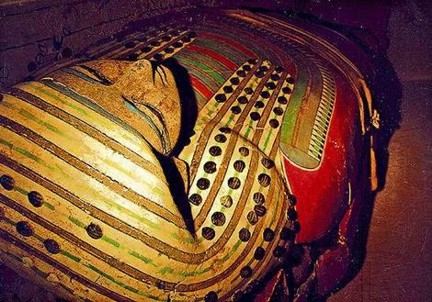
Sarcófago Saqqara Middlekingdom 01

The sarcophagus, contained in an outer wooden coffin, dates back to the Egyptian Middle Kingdom period. (AFP)

La misión de arqueólogos japonenses lleva desde los años noventa excavando en el sur de Saqqara para sacar a la luz las tumbas del Imperio Medio.

Una misión arqueológica japonesa ha hallado tres sarcófagos faraónicos de madera, que fueron sepultados hace más de 3.400 años en la localidad monumental de Saqqara, donde se encuentra la pirámide escalonada de Zoser, al suroeste de El Cairo. Según informaba ayer la prensa local, una misión de arqueólogos japoneses ha hallado estos sarcófagos que se remontan a las dinastías faraónicas del Imperio Medio (1975-1640 a.C.) y el Imperio Nuevo (1539-1075 a.C.).

Dos de los sarcófagos tienen casi 4.000 años de antigüedad, mientras que el tercero data del siglo XV antes de Cristo. Una de las cajas de madera es antropomorfa y contiene una momia, según el diario Ajbar al Yom.

El sarcófago, de color negro, tiene, además, dibujos de los cuatro hijos del dios Horus. Uno de los otros dos féretros, del Imperio Medio, es de una mujer, mientras el otro contiene en su interior una segunda urna de madera, también, con forma humana.

Esa caja está decorada con trozos de cristal negro alrededor de la cabeza, añade la fuente.

Las tumbas del Imperio Medio

La misión de arqueólogos japonenses lleva desde los años noventa excavando en el sur de Saqqara en el marco de un proyecto destinado a sacar a la luz las tumbas del Imperio Medio.

La mayoría de los hallazgos arqueológicos de Saqqara, encontrados hasta ahora, corresponden al periodo grecorromano (341 a.C.-395 d.C.) y a los imperios faraónicos Antiguo y Nuevo.

Fuente: AYV/EFE, El Cairo / La Estrella Digital.es, 11 de febrero de 2007
Enlace: http://www.estrelladigital.es/
a1.asp?sec=cul&fech=12/02/2007&name=ataud


(2) Japanese team finds ancient Egyptian coffins

AFP, February 10, 2007

Sarcófago Saqqara Middlekingdom 02

UNEARTHED: Head of Egypt’s Supreme Council for Antiquities Zahi Hawass inspects sarcophagi at the Saqqara pyramids near Cairo. Three painted wooden coffins were found by a Japanese archaeological team in tomb shafts.
(REUTERS)

CAIRO -- A Japanese archaeological team has discovered three painted wooden coffins in Egypt, including two from the little-known Middle Kingdom period dating back more than 4,000 years.

The sarcophagi were found in tomb shafts in the vast Saqqara necropolis south of Cairo, Zahi Hawass, the director of Egypt’s Supreme Council of Antiquities, said Saturday.

"It is significant because of the discovery of two sarcophagi from the Middle Kingdom," said Japanese team leader Sakuji Yoshimori.

The Saqqara burial grounds, which date back to 2,700 BC and are dominated by the massive bulk of King Zoser’s step pyramid - the first ever built - were in continuous use until the Roman period, three millennia later.

While the vast cemeteries have yielded numerous discoveries from the Old and New Kingdoms, artifacts from the Middle Kingdom of around 2,000 BC are comparatively rare.

One of the Middle Kingdom coffins, inlaid with black glass, was found inside a brilliantly painted outer box and dedicated to a man called Sabak Hatab. The other sarcophagus was for a woman named Sint Ayt Ess.

The third, which dated back to the New Kingdom’s 18th dynasty of around 1,500 BC and contained a mummy, was colored black and decorated with images of the four sons of the god Horus.

The Japanese began work in the area in the late 1990s and are comparative newcomers to excavations in Saqqara, which is already host to teams from Poland, Italy, Germany, and France as well as Egypt.

Source link: http://www.metimes.com/
storyview.php?StoryID=20070210-114012-2071r

Exposición: 'Afganistán, tesoros redescubiertos'. Las joyas de Kabul

Afganistán tesoros 00TA

El museo Guimet de París expone las riquezas arqueológicas salvadas de la rapiña soviética y la ira talibán.

En 1978, un año antes de la invasión soviética de Afganistán, el arqueólogo Viktor Sarianidi descubre por casualidad en la frontera norte del país un esqueleto femenino recubierto con objetos de oro. Las excavaciones dirigidas por este científico, oriundo de Uzbekistán, permiten exhumar otras cinco tumbas intactas de príncipes nómadas que vivieron en el siglo I de nuestra era. Las piezas más rutilantes de este extraordinario tesoro, salvado de la rapiña soviética y la ira iconoclasta talibán, son exhibidas por primera vez al público en París por el Museo de Artes Asiáticas Guimet en una exposición programada hasta el 30 de abril.

La historia de la necrópolis de Tillia-Tepe (’Colina de Oro’), último gran hallazgo arqueológico antes de que Afganistán cayera en el caos, es digna de una novela de aventuras. En 1979, ante la degradación del clima político, el tesoro formado por 21.618 piezas de las que 20.478 son de oro fue trasladado bajo escolta militar hasta el museo de Kabul donde permaneció una decena de años.

En 1988, con el país al borde de la guerra civil entre comunistas y rebeldes, el presidente prosoviético Mohamed Najibulá ordenó encerrar las piezas más valiosas en una caja fuerte del Banco Central, en los sótanos del antiguo palacio real de Arg. Para reforzar la seguridad confió las siete llaves que abrían la puerta de la cámara acorazada a siete personas diferentes, conforme a la tradición afgana.

Los comunistas, primero, y luego los talibanes intentaron en vano forzar los cerrojos de los cofres pero no pudieron impedir la propagación de todo tipo de rumores. Se creía que el tesoro bajo siete llaves había sido robado y transportado a lomo de mula hasta las cavernas de Panchir para negociarlo con mayor libertad. Se pensó que Bin Laden lo había sacado del país para financiar Al Qaeda con el producto de la venta. Y muchos estaban convencidos de que había seguido el camino del oro de Moscú y llevaba tiempo escondido en el Kremlin.

En 2002, tras el derrocamiento del régimen talibán, se comenzó a a rumorear que las colecciones del museo de Kabul no habían sido totalmente saqueadas o expoliadas en los pillajes de los años noventa. En 2003 el presidente Amir Karzai, entonces jefe del Gobierno interino instalado por una coalición occidental, localizó las siete llaves meses después de llegar al poder. En junio de 2004 tuvo lugar la reapertura solemne de los cofres y arrancó el inventario de las obras recobradas, así como la restauración de las deterioradas por tanto trajín.

En París, el tesoro de la ’Colina de Oro’ se expone junto a frutos procedentes de otros tres yacimientos -Fullol, Ai-Khanoum y Begram- que abarcan vestigios desde el siglo IV antes de nuestra era hasta el siglo III. Completan una selección de 220 coronas, brazaletes, pendientes, platos, jarrones, estatuillas, bajorrelieves, anillos y otras piezas diversas que testimonian las múltiples influencias culturales (iraníes, indias, escitas, chinas y helenísticas) de la riqueza patrimonial de un país fecundado por la aportación de las grandes civilizaciones, en la encrucijada del Asia central con las rutas de la seda y las estepas. Una parte de los siete euros que cuesta la entrada se destina a financiar las obras de reconstrucción del museo de Kabul.

PROGRAMA

Exposición: ’Afganistán, tesoros redescubiertos’.

Dónde: Museo Guimet de Artes Asiáticas, en París.

Cuándo: Hasta el 30 de abril.

Contenido: 200 piezas, entre la Edad de Bronce y el imperio Kushan.

Abierto: Todos los días, menos los martes.

Entrada: 7 euros.

Fuente: FERNANDO ITURRIBARRÍA, París / El Correo Digital, 5 de febrero de 2007
Enlace: http://www.elcorreodigital.com/vizcaya/
prensa/20070205/sociedad/joyas-kabul_20070205.html
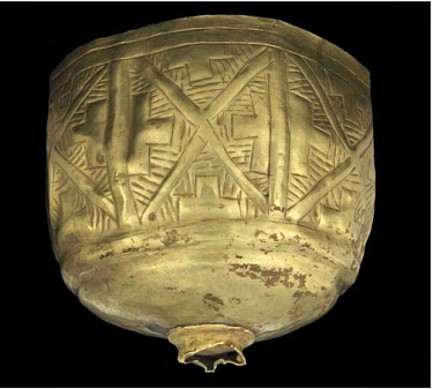
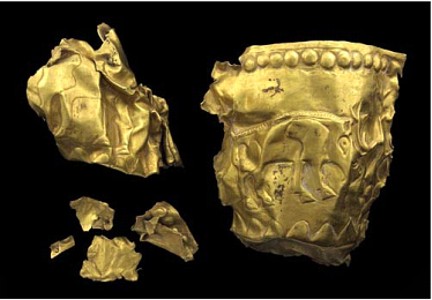
Afganistán Copa decoraciones geométricas
Coupe à motifs géométriques, or, Afghanistan, Tepe Fullol, Age du Bronze, fin du troisième millénaire (2100-2000 av JC). © Crédit: musée Guimet, Thierry Ollivier
Afganistán Copa decoraciones toro montaña
Bol avec sanglier et décor d’arbre sur une montagne, or, Afghanistan, Tepe Fullol, Age du Bronze, fin du troisième millénaire (2100-2000 av JC). © Crédit: musée Guimet, archives photographiques.
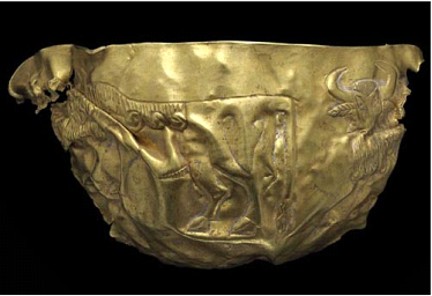
Afganistán Copa decoraciones toros barbudos
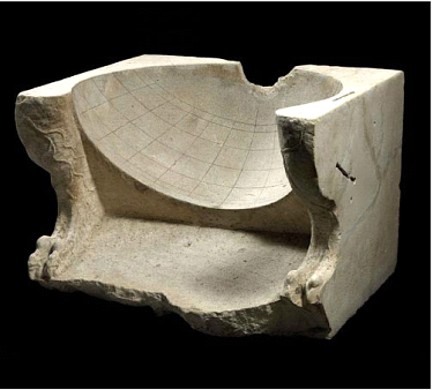
Bol à décor de taureaux barbus, or, Afghanistan, Tepe Fullol, Age du Bronze, fin du troisième millénaire (2100-2000 av JC). © Crédit: musée Guimet, Thierry Ollivier. Grâce à ce cadran solaire, les habitants d’Aï Khanoum avaient une idée approximative de l’heure.
Afganistán calendario solar
Cadran solaire en portion d’hémisphère, Afghanistan, Aï Khanoum, Gymnase, 3ème siècle avant JC, Calcaire, Musée national de Kaboul. © musée Guimet, Thierry Ollivier
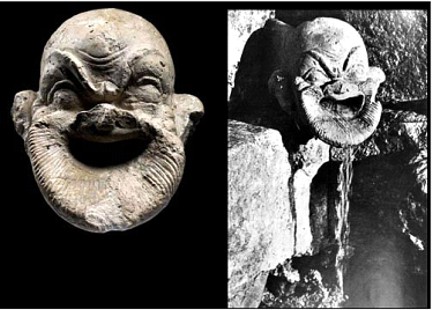
Afganistán fuente máscara cómica
Fontaine des bords de l’Oxus, gargouille au masque comique, fouilles de 1975 dirigées par Paul Bernard. © musée Guimet, archives photographiques. Ce médaillon allie les imageries grecques et orientales: on y voit Cybèle, la déesse orientale de la nature debout sur un char tiré par des lions. Au-dessus d’elle figure Helios, le Dieu grec du soleil!
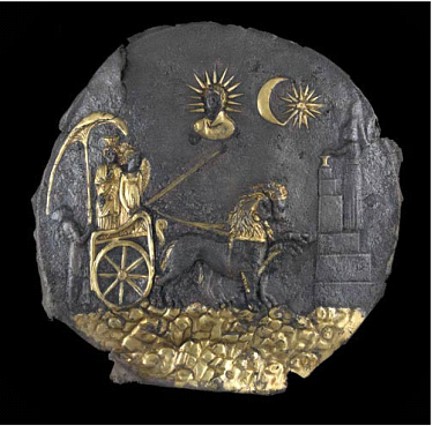
Afganistán placa Cibéles
Plaque de Cybèle, Afghanistan, Aï Khanoum, sanctuaire du temple à niches indentées, 3ème s Av JC, argent doré, Musée National de Kaboul. © musée Guimet, Thierry Ollivier.
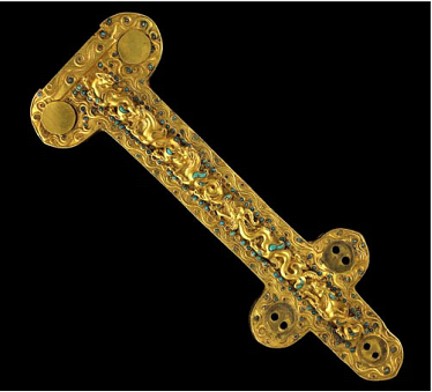
Afganistán brazalete lucha de animales
Fourreau orné d’une scène de combat d’animaux, Afghanistan, Tillia Tepe, or, turquoise, bois et cuir, 1er siècle, musée national de Kabou. © musée Guimet, Thierry Ollivier
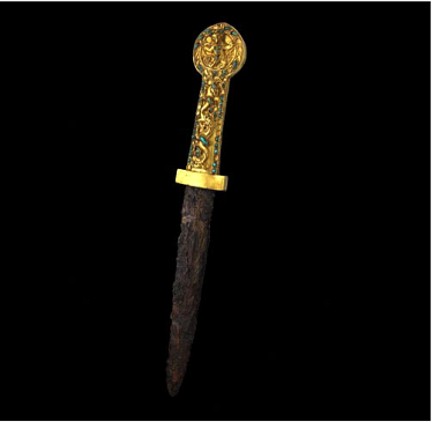
Afganistán puñal con lucha animales
Poignard orné d’une scène de combat d’animaux, Afghanistan, Tillia Tepe, or, fer, turquoise, 1er siècle, musée national de Kaboul. © musée Guimet, Thierry Ollivier
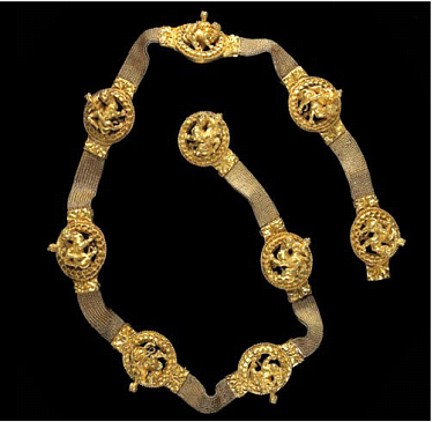
Afganistán cinturón Tillia Tepe
Ceinture en or, Afghanistan, Tillia Tepe, 1er siècle, musée national de Kaboul. © musée Guimet, Thierry Ollivier
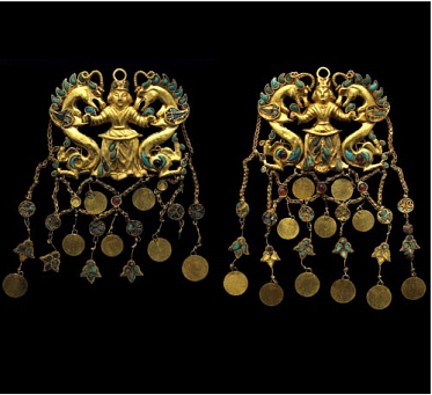
Afganistán pendientes soberano y dragones
Pendeloques dîtes du "souverain et des dragons", Afghanistan, Tillia Tepe, 1er siècle, or, turquoise, grenats, lapis-lazuli, musée national de Kaboul.
© musée Guimet, Thierry Ollivier
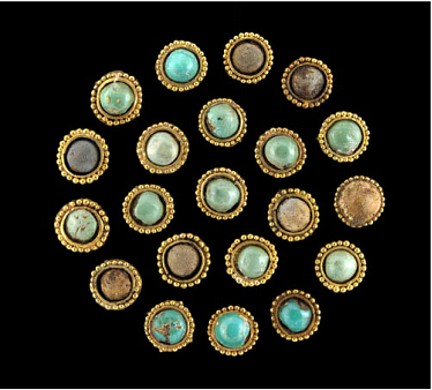
Afganistán placas Tillia Tepe cornalina
Plaquettes, Afghanistan, Tillia Tepe, or, turquoise, cornaline, grenats, 1er siècle, musée national de Kaboul. © musée Guimet, Thierry Ollivier
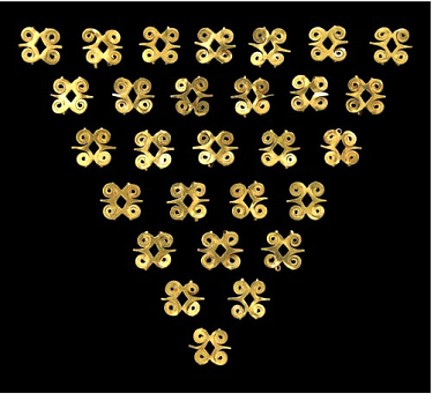
Afganistán plaquetas Tillia Tepe oro cornalinas
Plaquettes, Afghanistan, Tillia Tepe, or, turquoise, cornaline, grenats, 1er siècle, musée national de Kaboul. © musée Guimet, Thierry Ollivier

Afganistán placas corazón oro turquesas
Plaquettes, Afghanistan, Tillia Tepe, or, turquoise, cornaline, grenats, 1er siècle, musée national de Kaboul. © Crédit : musée Guimet, Thierry Ollivier
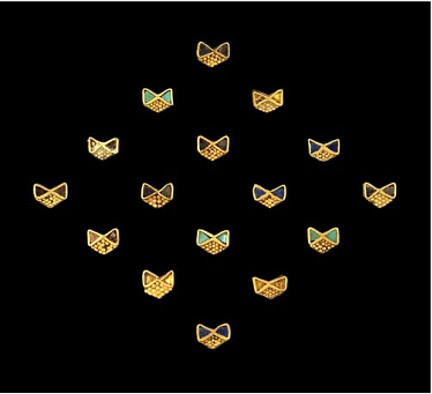
Afganistán placas lazo turquesas
Plaquettes, Afghanistan, Tillia Tepe, or, turquoise, cornaline, grenats, 1er siècle, musée national de Kaboul © musée Guimet, Thierry Ollivier
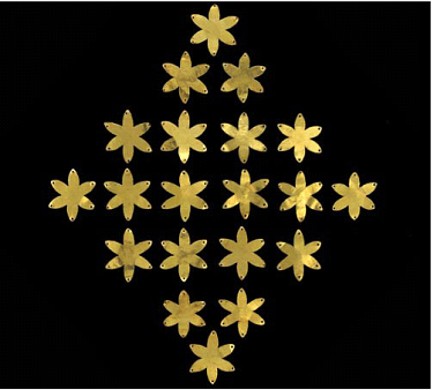
Afganistán placas oro estrellas 6 puntas
Plaquettes, Afghanistan, Tillia Tepe, or, turquoise, cornaline, grenats, 1er siècle, musée national de Kaboul. © musée Guimet, Thierry Ollivier
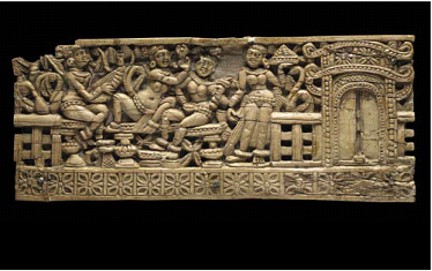
Afganistán placa marfil tesoro Begram
Scène de palais, trésor de Bégram, Ivoire. © musée Guimet, Thierry Ollivier
Quel étrange objet! Tu distingues peut-être tout en bas le fantastique makara qui crache une cavalière à dos de léogryphe.
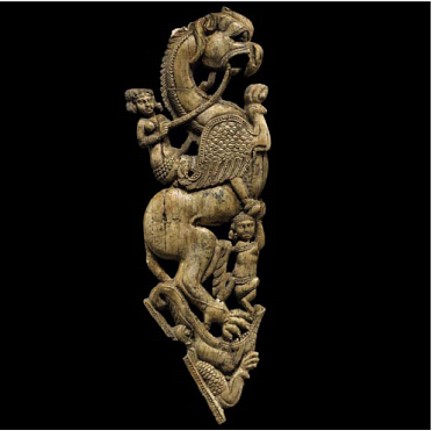
Afganistán Cavalière chevauchant un léogryphe trésor de Bégram
Cavalière chevauchant un léogryphe, trésor de Bégram, Ivoire. © musée Guimet, Thierry Ollivier
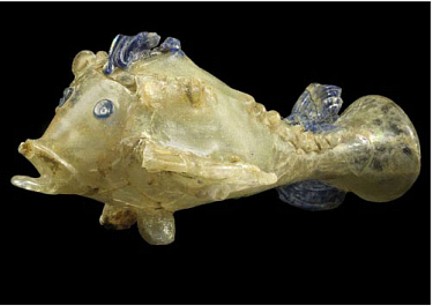
Afganistán Flacon ichthyomorphe Trésor de Begram verre soufflé
Flacon ichthyomorphe, Trésor de Begram, verre soufflé. © musée Guimet, Thierry Ollivier
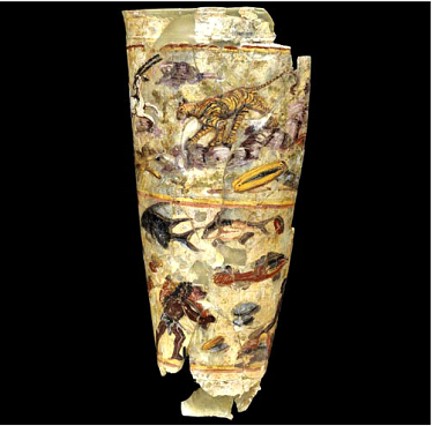
En bas, le monde de la mer : poissons, coquillages et pêcheur. En haut, la terre ferme : un tigre à la poursuite d’un bouquetin!
Afganistán Grand gobelet à décor peint scène de chasse et de pêche
Grand gobelet à décor peint, scène de chasse et de pêche, Trésor de Bégram, verre incolore. © musée Guimet, Thierry Ollivier
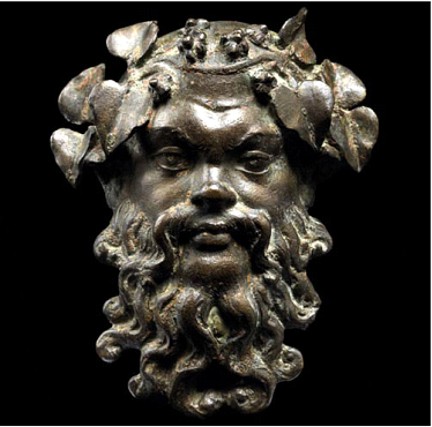
Feuille de lierre dans les cheveux, longue barbe et nez épaté, voici Silène, le dieu grec de l’ivresse.
Afganistán Masque de Silène trésor de Begram bronze
Masque de Silène, trésor de Begram, bronze. © musée Guimet, Thierry Ollivier
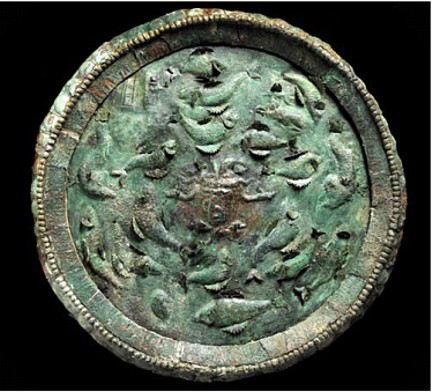
Cet objet fait partie des curiosités du trésor de Begram. C’est un aquarium en bronze, où de petits poissons métalliques, suspendus par des chainettes semblent flotter une fois le bassin rempli d’eau.
Afganistán aquarium en bronze
Fotos: © Musée des arts asiatiques - Guimet


(2) Alexander’s Afghan gold

After establishing the Egyptian port city of Alexandria in 331 BC, Alexander the Great founded Greek garrison cities across Asia, including Afghanistan. His legacy is on show in a new Paris exhibition, writes David Tresilian
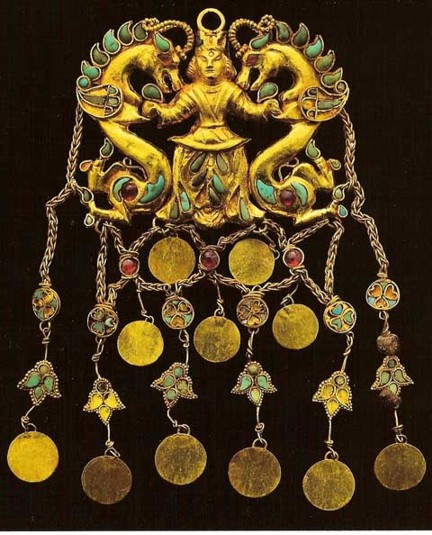
Tesoros Afganos 001

"Sovereign and Dragon" pendant found at the Tillia Tepe treasure
Tesoros Afganos 003

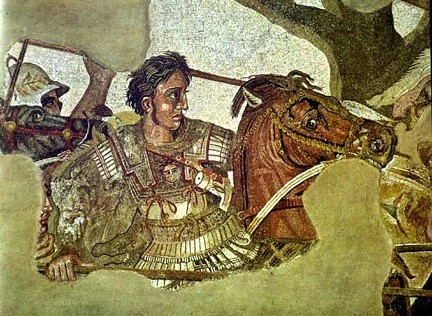
Alexander the Great, detail from a mosaic dated to the late second century BC
Tesoros Afganos 002

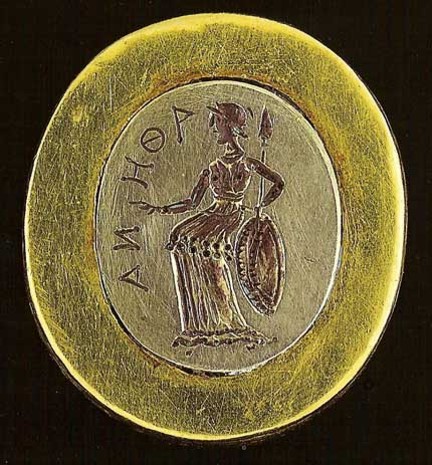
A ring with the image of Athena, part of the Tillia Tepe treasure

While not drawing quite the crowds making their way to the Grand Palais for Trésors engloutis d’Egypte, an exhibition of mostly Ptolemaic artefacts -- "submerged treasures" -- discovered off the coast of Alexandria and reviewed in Al-Ahram Weekly on 14 December, Afghanistan, les trésors retrouvés across Paris at the Musée Guimet should nevertheless be on the itinerary of every visitor to the French capital.
This exhibition features discoveries of international importance made by French archaeological missions in Afghanistan over the course of the last century, most of which have never been seen before outside the country. In what is being seen as quite a coup both for the Musée Guimet, an institution specialising in south and south-east Asian art, and for the French capital, the exhibition allows visitors to gain their first glimpses of material that not only has never been lent before by the Afghan National Museum in Kabul, but that was also considered lost during the decade of civil war that wracked Afghanistan following the withdrawal of Soviet forces in 1989, destroying much of the country as it did so.

The material includes the famous "Bactrian gold" discovered by joint French and Afghan archaeologists in northern Afghanistan shortly before Soviet forces moved into the country in 1979. This material, long thought lost, survived the later civil war locked in the vaults of the National Bank in Kabul, where it was "rediscovered" following the US-led invasion in October 2001. It also includes Hellenistic objects from excavations carried out at the site of the ancient city of Ai Khanoum north of Kabul and Hellenistic and Indian materials found at Begram (Bagram).

Taken as a whole, Afghanistan, les trésors retrouvés is one of the most important archaeological exhibitions to have visited the French capital for years, and it is the only opportunity European and international visitors will have to view this material before it moves onto the US leg of its world tour in April 2007. It is a fine successor to Afghanistan, une histoire millénaire (Afghanistan: A Timeless History), an exhibition of mostly Graeco-Buddhist Afghan materials brought together in the wake of the destruction of the Bamiyan Buddhas by the Taliban, also at the Musée Guimet and reviewed in the Weekly in March 2002.

The exhibition is divided into three parts, the first of which displays materials discovered at Ai Khanoum by successive French archaeological missions, providing insights into the functioning of this Hellenistic garrison city founded following Alexander the Great’s conquest of the area in the late fourth century BC. Alexander’s epic journeys took him from his native Macedonia in northern Greece to the plains of the western Punjab in what is now Pakistan, destroying the Persian Empire as he did so, as well as through Anatolia, the Levant and to Egypt, where he founded the port city of Alexandria and consulted the oracle of Amun at Siwa.

Following Alexander’s death in 323, his generals divided his conquests among themselves, Ptolemy taking Egypt and turning it into the richest and longest-lasting Hellenistic kingdom, and Seleucus taking the vast territories Alexander had conquered in Asia and controlling Greek garrison cities almost to the Indus River. Ai Khanoum was one of these, and the present exhibition includes notable items discovered at the site, as well as a rewarding Japanese video reconstruction of how the city might once have looked.

Visitors to the Musée Guimet’s earlier Afghan exhibition in 2002 will be aware of the heartbreaking damage done to the excavated materials and to this site itself during Afghanistan’s period of civil war and Taliban rule, photographs in the catalogue showing excavated Hellenistic mosaics churned up and destroyed and Greek building capitals re-used to support wooden posts in village tea-houses.

While the international protests that came in the wake of Taliban threats to destroy the monumental statues of the Buddha at Bamiyan in southern Afghanistan in the event did nothing to save these fourth-century-AD statues, they at least drew attention to the unique form of art pioneered in this region. Hellenistic culture in south Asia gradually gave way to Buddhism, itself in turn later replaced by Islam, but as it did so Greek sculptural forms gave shape to figures from the new religion. This resulted not only in the colossal representations of the Buddha at Bamiyan but also in the many sculptures of bodhisattvas, monks and ascetics that have been found at the sites of Buddhist monasteries in Afghanistan, notably at Hadda near Jalalabad in the south-east of the country, and at the Gandhara Buddhist sites in neighbouring Pakistan.

The collections of such materials once held by the Afghan National Museum have been destroyed. However material shipped to France under find-sharing arrangements can still be seen upstairs at the Musée Guimet, including the so- called Génie aux fleurs, an Afghan Hellenistic statue acquired by André Malraux in the 1920s. For the present writer, one of the highlights of any trip to Pakistan has to be a visit to the archaeological museum in Peshawar near the Afghan border, which contains one of the world’s finest collections of this kind of Buddhist art.

As far as the present exhibition is concerned, for many visitors the highlight will be the "Bactrian Gold" found in 1978 at the archaeological site of Tillia Tepe ("mound of gold") in northern Afghanistan and displayed in the show’s second room. Dating from the first century AD, this includes brooches, rings, earrings and decorative hair pieces made of gold and lapis lazuli, and was found in six tombs, five of women and one of a man. Together, these items testify to the role Afghanistan has played for millennia as the gateway to India and to south and east Asia. The tombs contain Hellenistic items such as rings and other objects bearing the image of the goddess Athena, as well as items bearing the stamp of Indian and Chinese cultures, showing how different cultural influences came together in this region in the centuries following Alexander’s conquest.

The exhibition’s third and final room contains objects found walled up in two underground chambers at Begram by French archaeological missions in 1937, again including objects coming from the Greek Mediterranean world and from India and China. In addition to numerous Indian ivories, the chambers contained items testifying to the memory at least of Hellenistic culture.

There are plaster medallions representing Zeus and Ganymede, as well as the youth Endymion, condemned to eternal sleep to preserve his beauty. Bronze statuettes represent Eros and Harpocrates and, most intriguingly of all, fragments of a painted glass vessel show Homer’s story of the combat between Achilles and Hector at Troy. Unlike the gold items found at Tillia Tepe, the Begram hoard has no great value, aside from the information it contains regarding the history and culture of this area in late antiquity.

In the publicity material accompanying the exhibition, Jean-François Jarrige, president of the Musée Guimet, explains the personal interest taken in the show by both Hamid Karzai, president of the Islamic Republic of Afghanistan, and by the French president, Jacques Chirac. The choice of Paris for this exhibition "was not unconnected" with the decision taken by the Afghan king Amanullah in the early 20th century to confer the country’s educational system and archaeological sites to the French, Jarrige says, perhaps a calculated gesture in the direction of the British regime that then ruled much of neighbouring India.

Whatever the case may be, visitors to Afghanistan, les trésors retrouvés have reason to be grateful to the generations of French and Afghan archaeologists who have worked so tirelessly to recover the area’s history, latterly under very difficult circumstances. The result here, in the words of Jarrige, is an exhibition that moves the visitor by "works of exceptional quality that speak to us of Alexander the Great, of Egypt and of the Hellenistic Near East, of Indo-Greek kings, of aristocrats of the steppes, and of the Roman, Parthian, Indian and Chinese empires."

Afghanistan, les trésors retrouvés, Musée Guimet, Paris, 6 December 2006--30 April 2007.

Source Link: http://weekly.ahram.org.eg/2007/830/he1.htm