
Descubren restos un lujoso palacio bizantino de hace 1.500 años
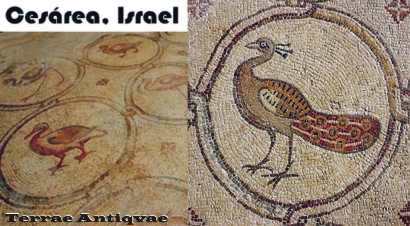 Foto: An Israeli Antiquities Department volunteer sprays water over a Byzantine era bird mosaic at an excavation site in the northern coastal town of Caesarea, Israel, Monday Sept.19, 2005. In 1950, Israeli authorities found the remains of a mosaic floor during military exercises, later an archaeological excavation yielded a rectangular area composed of series of birds. In 2005 archaeological excavation revealed that the Bird mosaic is from the late Byzantine period in the 5th or 6th century A.D. (AP Photo/Ariel Schalit/ (2)Photo: Courtesy Photo)
Arqueólogos israelíes han descubierto restos del lujoso palacio de una familia cristiana de la época bizantina, entre ellos una mesa con incrustaciones en oro, durante unas excavaciones en la antigua ciudad romana de Cesárea.
Otro hallazgo notable ha sido un colorido mosaico decorado con aves y animales, de 16 metros de largo por 14,5 de ancho, en el patio central de la mansión, edificada frente al mar Mediterráneo.
El mosaico fue hallado casualmente debajo de una duna, durante unas maniobras del Ejército israelí, cuando los soldados cavaban trincheras, explicó el director de la excavación, Yosef Porat.
Los arqueólogos de la Autoridad de Antigüedades de Israel suponen que el suntuoso palacio perteneció a una familia de la aristocracia bizantina pero de momento no se han encontrado inscripciones que permitan identificar a sus antiguos moradores.
La mansión fue destruida por un incendio hacia finales del período bizantino en Tierra Santa (324-638 d.C), cuando el estratégico puerto de Cesárea fue conquistado por los árabes musulmanes.
El mosaico muestra leones, panteras, perros, elefantes, toros, un jabalí, antílopes y aves, entre estas un pavo real.
Las incrustaciones de oro en la mesa, la única descubierta hasta la fecha entre los restos conocidos del período bizantino y de incalculable valor, según el experto Jacques Neguer, llevan estampadas en relieve una flor o una cruz.
Fuente: Terra Actualidad EFE, 20 de septiembre de 2005
Enlace: http://actualidad.terra.es/sociedad/articulo/descubren_restos_lujoso_palacio_bizantino_498479.htm
------------------------------------------------------------------------------------
(2) Caesarea Byzantine mansion site inaugurated
The remains of a lavish Byzantine mansion with pictorial mosaic flooring and a rare table with gold-encrusted glass platelets have been uncovered in the coastal city of Caesarea during an archaeological excavation, Israel's Antiquities Authority announced Monday.
The 16 X 14.5 meter rectangular colorful mosaic -- part of the main central courtyard of the palace -- located just off the shorelines of the Mediterranean Sea, had been buried under sand dunes for the past 50 years, since 1950, when an Israeli army unit undergoing training in the area accidentally stumbled on a section of the impressive mosaic flooring when digging trenches, excavation director Dr. Yosef Porat said.
After being covered over for the next half a century, the Antiquities Authority carried out an excavation at the site last year, in cooperation with the Caesarea Development Corporation, which invested NIS 600,000 in the development of the project.
The epicenter of the site, which was inaugurated on Monday, is the impressive open-air mosaic paved courtyard, which, in an unusual move, visitors are allowed to walk freely on.
According to the director of the excavations, the 6th century mansion likely belonged to one of the richest Christian families in Caesarea, possibly the aristocracy, although no inscriptions have been found
at the site to date.
The palace was destroyed by fire near the end of the Byzantine Period (324-638 CE) when the Arabs conquered the strategic harbor city, and set fire to any building outside the city walls, he said.
The mosaic-lined courtyard is composed of a series of animals, including lions, panthers, wild boars, dogs elephants, antelopes, and bulls, all enclosing 120 medallions, each of which contains a single bird, causing archaeologists to dub it "the bird mosaic."
During the excavations surrounding the central courtyard, archaeologists uncovered a unique table inlaid with a checkerboard pattern of gold-encrusted glass platelets in various shapes. Each square glass platelet in the table, which was found lying
upside-down on the pavement, bears a flower or cross stamped into the platelet after its production was completed, an unusual process that required reheating the glass.
With its unique decorative glass design, the table -- deemed "priceless" by Antiquities Authority conservation specialist Jacques Neguer -- is thought to be the only one its kind found in the excavation of a late Byzantine structure.
The 1,500-year-old table will be transferred to the Antiquities Authority Jerusalem laboratories for conservation.
The site is open to visitors free of charge.
Fuente: By ETGAR LEFKOVITS / Jerusalem Post, 19 de septiembre de 2005
Enlace: http://www.jpost.com/servlet/Satellite?pagename=JPost/JPArticle/ShowFull&cid=1127096414685
0 comentarios