
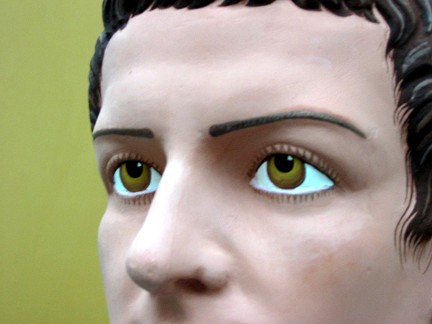
El Museo Nacional de Arqueología de Atenas presenta a partir de hoy una exposición de réplicas de 21 estatuas policromadas de dioses griegos
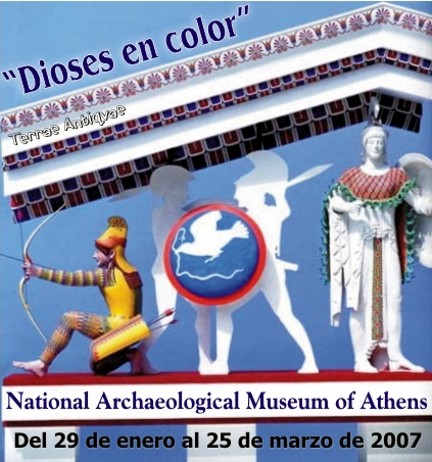
La idea fue lanzada por el Museo de Esculturas (Gliptoteca) de Munich (Alemania) tras más de una década de investigación y la exposición, titulada Dioses en color, ha sido presentada en otras capitales europeas desde 2004.
La Universidad de Munich necesitó 17 años para completar un estudio basado en el arte de la manera en que los griegos de la Antigüedad pintaban las estatuas de mármol.
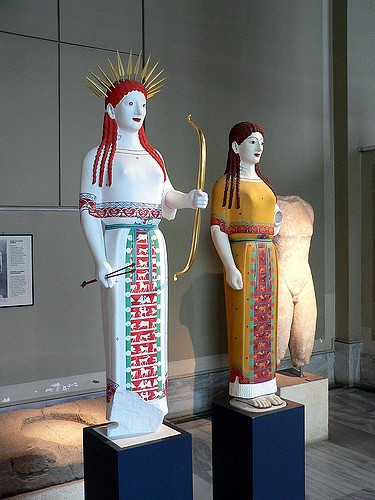
Así, el público griego tendrá la oportunidad, hasta el 24 de marzo, de observar estatuas conocidas hasta ahora en su versión de mármol blanco, como la doncella con velo, que está actualmente en el Museo de la Acrópolis, esta vez, policromada.
La exhibición también incluye frisos del templo de Athena Afea de la isla de Egina, de los monumentos de la Acrópolis de Atenas, el león de Lutraki y la lápida de Aristionos.
La tecnología ha permitido que los especialistas descubran los colores que tenían las estatuas encontradas en excavaciones, tanto griegas como romanas.
Los colores que predominan son rojo, verde, azul y amarillo.
El Museo de Arqueología de Atenas ha agregado a la exposición otras 30 estatuas originales que pertenecen a la colección permanente de la institución.
Fuente: Terra Actualidad EFE, 30 de enero de 2007
Enlace: http://actualidad.terra.es/cultura/articulo/
exposicion_replicas_estatuas_antiguas_policromadas_1359833.htm
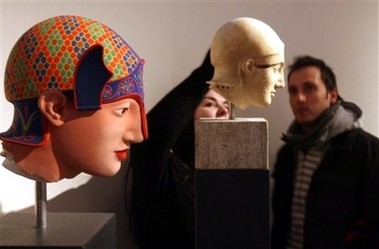
Visitors look the marble head of a warrior dating to 490 B.C. as a painted replica is seen in the foreground at the National Archeological museum in Athens on Tuesday, Jan. 30, 2007. An exhibition of 21 painted plaster copies, displayed next to original sculptures, seeks to challenge modern perceptions of ancient statues as pure, milk white objets dart. In fact, they were brightly painted with colors that have since worn off. The exhibition, first presented in Germany in 2004, runs until March 25. (AP Photo/Thanassis Stavrakis)
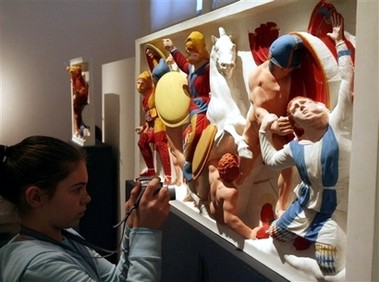
A young girl takes a photograph of a painted replica, shows Alexander the Great in a battle against the Persians, at the National Archeological museum in Athens on Tuesday, Jan. 30, 2007. An exhibition of 21 painted plaster copies, displayed next to original sculptures, seeks to challenge modern perceptions of ancient statues as pure, milk white objets dart. In fact, they were brightly painted with colors that have since worn off. The exhibition, first presented in Germany in 2004, runs until March 25. (AP Photo/Thanassis Stavrakis)
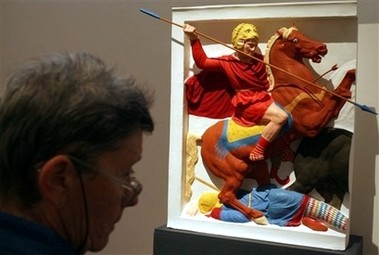
A visitor looks a painted replica, showing Alexander the Great in a battle against the Persians, at the National Archeological museum in Athens on Tuesday, Jan. 30, 2007. An exhibition of 21 painted plaster copies, displayed next to original sculptures, seeks to challenge modern perceptions of ancient statues as pure, milk white objects dart. In fact, they were brightly painted with colors that have since worn off. The exhibition, first presented in Germany in 2004, runs until March 25. (AP Photo/Thanassis Stavrakis)
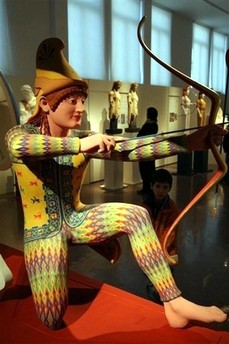
A painted replica of the Trojan archer Paris is displayed at the National Archeological museum in Athens on Tuesday, Jan. 30, 2007. An exhibition of 21 painted plaster copies, displayed next to original sculptures, seeks to challenge modern perceptions of ancient statues as pure, milk white objects dart. In fact, they were brightly painted with colors that have since worn off. The exhibition, first presented in Germany in 2004, runs until March 25. (AP Photo/Thanassis Stavrakis)
Reportaje Gráfico: Fotografías de Lars Kirkegaard
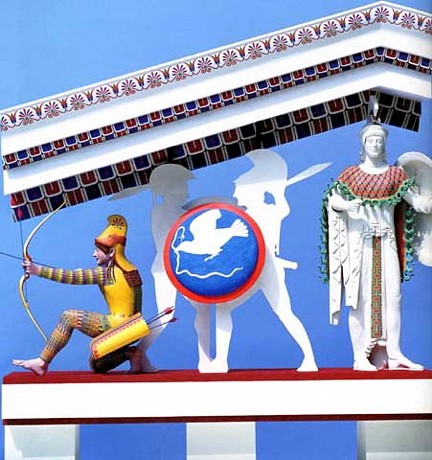
Friso Templo de Atenea
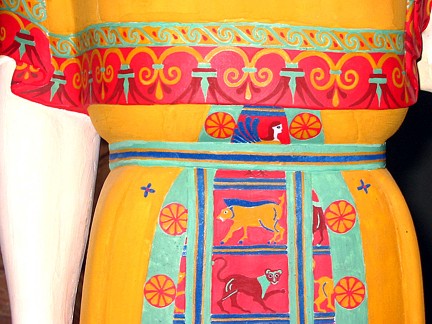
Peplos Koren, 540 a.C.
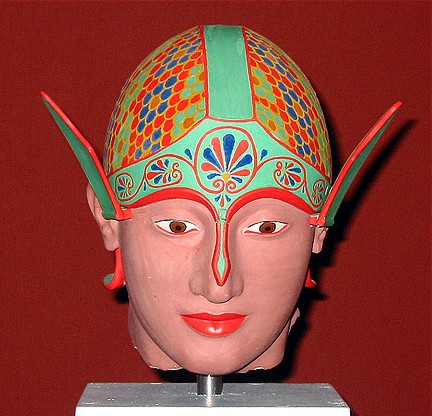
Aphaiatemplet Aigina 500 a.C.
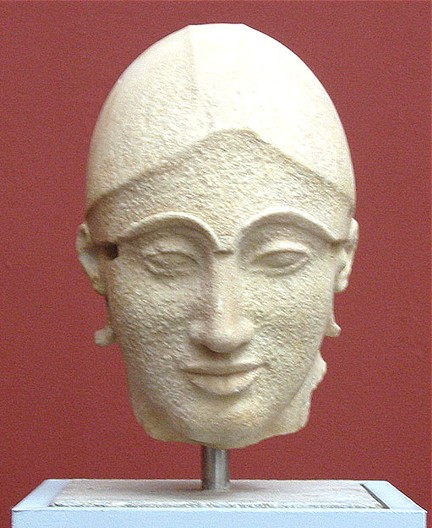
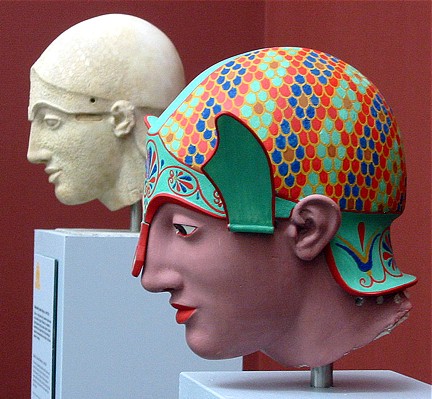
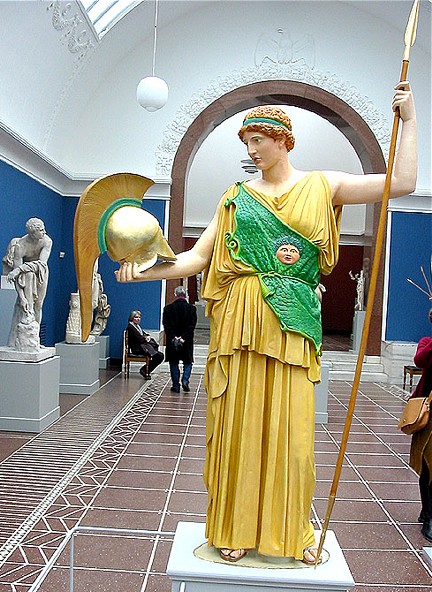
Rekonstruktion af Athena Lemnia
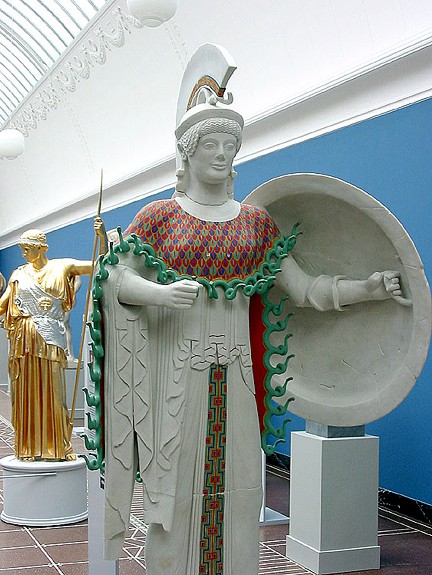
Athene Aphaiatemplet Aigina 500 a.C.
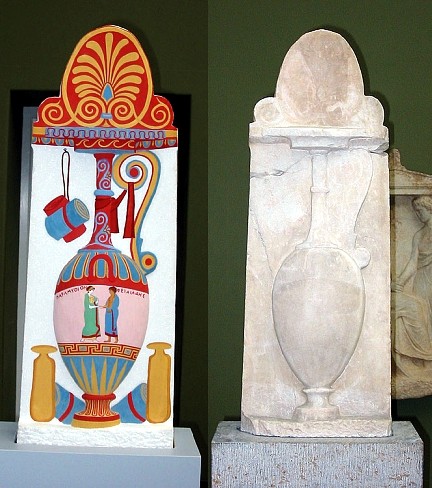
Paramythions gravstele 370 a.C.
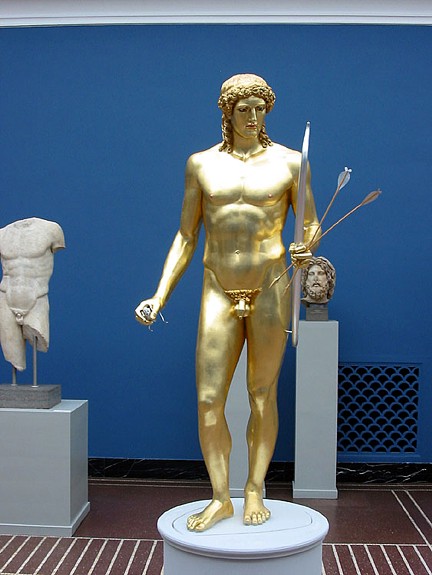
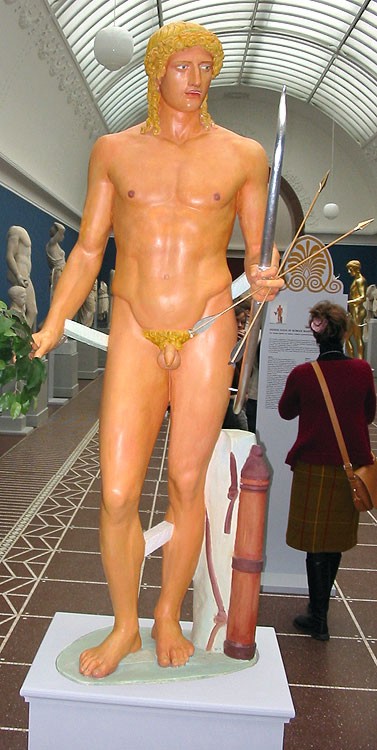
Apollon Parnopios af Fidias 450 a.C.
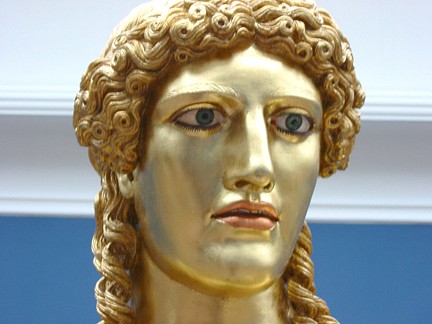
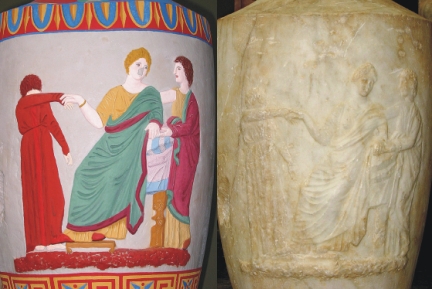
Attisk gravlekythos 350/320 a.C.
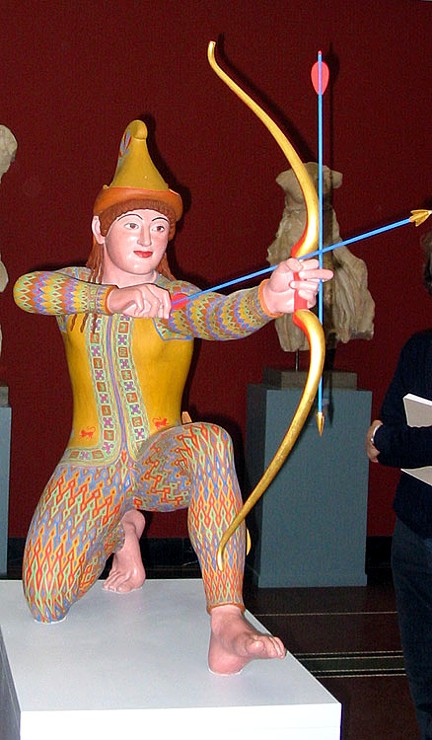
Paris Aphaiatemplet Aigina 500 a.C.

Peplos koren 540 a.C.
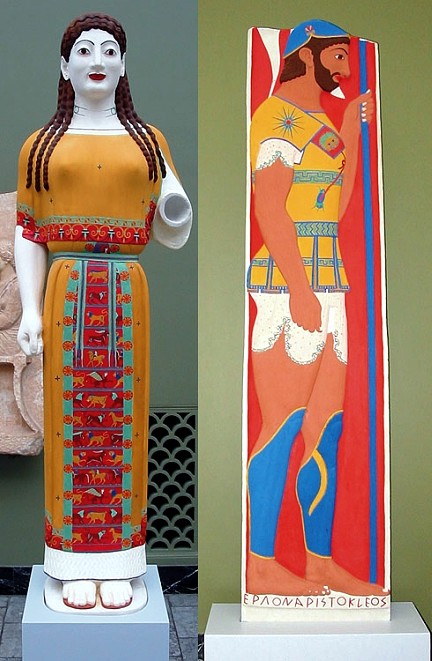
Aristion stelen gravmaele Athen 510 a.C.
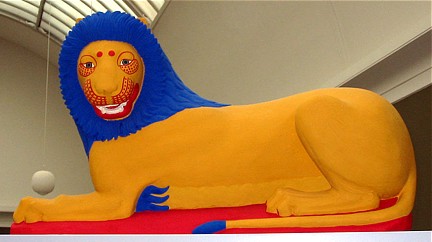
Gravlove fra Loutraki ca. 570/550 a.C.
Temporary Exhibition
GODS IN COLOUR COLOURS ON ANCIENT SCULPTURE
29 January 2007 - 25 March 2007
The exhibition includes 21 coloured replicas of famous ancient sculpture as well as 51 original exhibits of the National Archaeological Museum of Athens, which preserve colours (sculpture, pottery, idols).
The exhibition of the 21 coloured replicas was first presented in 2004 at the Glyptothek of Munich and then on at other European countries. The concept of the exhibition is based on research made by the University of Munich since 1982 concerning the colouring of ancient sculpture. The publication of the results of the research through this exhibition has an educational role as it enriches our knowledge, showing a different perspective on how the ancient sculpture would be with the use of colours. A scientific catalogue of the exhibition is available.
Ancient sculptures don bright colors. Educational exhibition at National Archaeological Museum
By Iota Sykka - Kathimerini
At the National Archaeological Museum, Gods in Color features 21 replicas on loan from the Munich Glyptothek, on show until March.
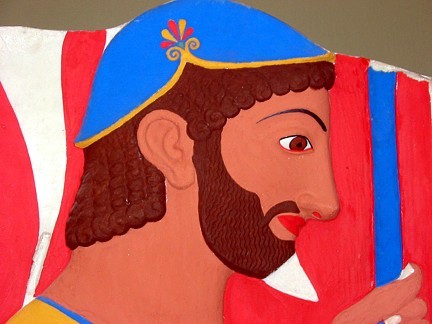
Talk about striking colors: red, green, blue and yellow, all blinding visitors in the National Archaeological Museums temporary exhibition hall where Munichs «Gods in Color» show is now on display. How can it be? Take the peplos kore (veiled maiden), for instance, who, unlike her bareness in the Acropolis Museum, is now dressed in bright colors.
Inaugurated last night, the new exhibition at the National Archaeological Museum will no doubt become the talk-of-the-town. Not solely due to its educational character, but also because of its color. Is this what ancient sculptures really looked like?
Museum Director Nikos Kaltsas did not wish to present an exhibition based exclusively on replicas. That is why he asked the Glyptothek of Munich for 21 colored replicas, while the rest, which make up the bulk of the exhibition, stem from its own permanent collections. This is an educational show demonstrating that ancient sculptures were not limited to the white marble we see today.
The exhibition was presented for the first time at the Munich Glyptothek in 2004, before traveling to a number of countries for about two years. The idea was born 17 ago and was based on research conducted by the University of Munich on the subject of the coloring on ancient sculpture. The results are far from the images of sculptures that emerge from excavations, or even later on, when their whiteness was highlighted in museum cases. Even those works which maintain fragments of color on the surface do not look anything like these pieces.
«New research methods were developed in order to trace color remnants on ancient sculptures. This was followed by careful analysis, in order to reproduce the initial colors with as much accuracy as possible. When all this was achieved, color was added to replicas of well-known Greek and Roman sculptures,» said Kaltsas.
It is a well-known fact that both ancient Greek sculptures and temples featured color, yet color remnants on some works today cannot do justice to their original appearance.
«Gods in Colors» summarizes the findings of long-term analysis and research at the Munich Glyptotheks ateliers - not to mention a different kind of aesthetic.
«This exhibition confirms, once more, that what we know of the past is never really a given. Archaeological research is constantly developing through the adoption of new methods, whose aim is to get closer, if not reach, the truth.»
National Archaeological Museum, 44 Patission, tel 210.821.7724. The exhibition runs to March 24.
Source Link: http://www.ekathimerini.com/4dcgi/
_w_articles_civ_267558_30/01/2007_79504
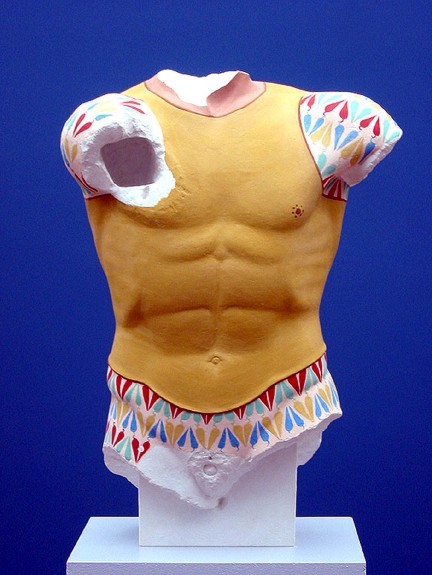
Pansertorso Athens Akropolis 460 a.c.
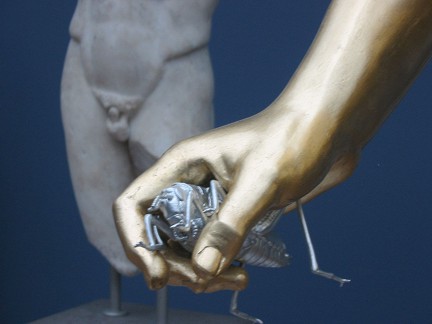
Apollon Parnopios af Fidias 450 a.C.
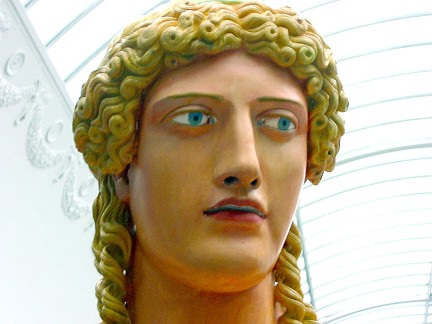
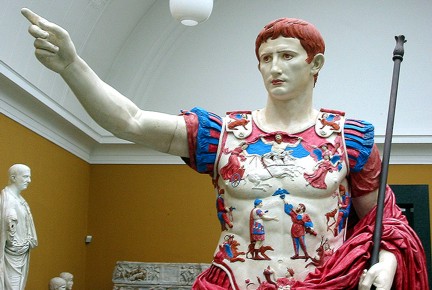
Augusto
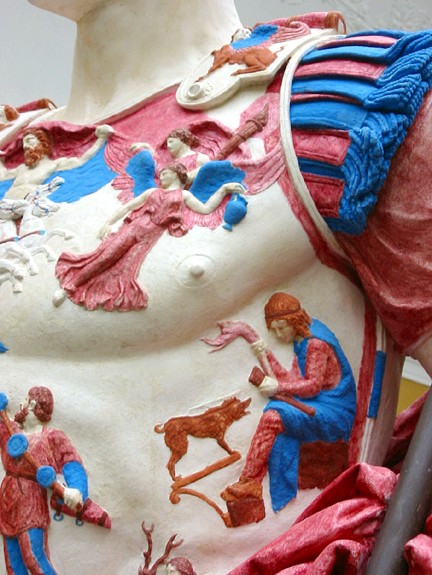
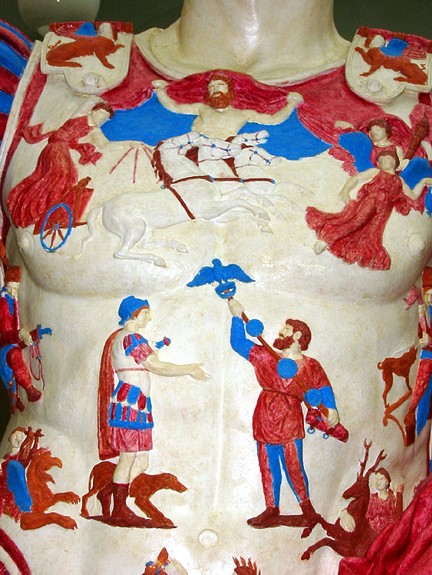
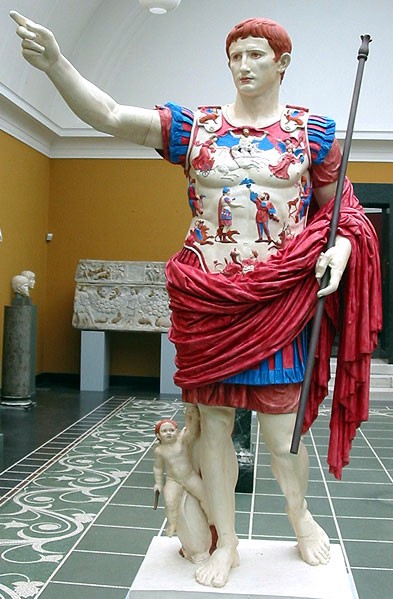
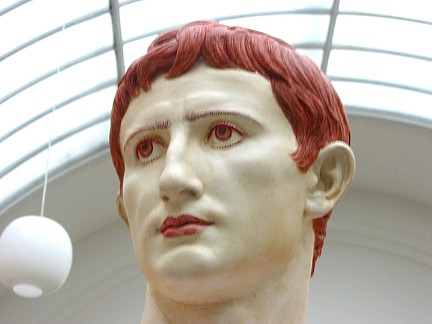
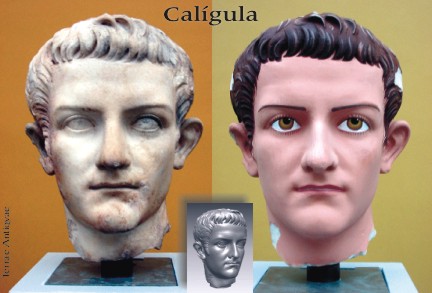
Calígula

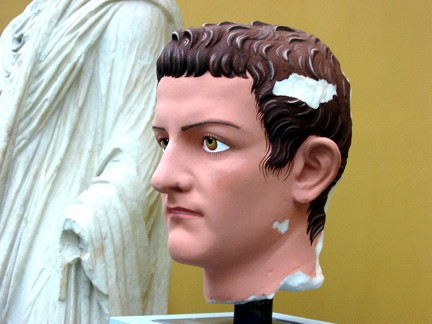
18 comentarios
aldobelus -
EDU -
José Montesinos -
José Montesinos -
Si tuvieses idea de Historia e Historia del Arte te irías directamente a los retratos de Fayum en Egipto y te darías cuenta de la realidad histórica y de tu SUMA IGNORANCIA al respecto. Por dios no quieras llevar la razón cuando no la tienes y aún menos dudar de la profesionalidad y los conocimietos experimentados de alguien que te da muchas vueltas en estos temas. Saludos y ten más cuidado con los comentarios que haces.
Mery! -
jorge hugo bertran vall (bertranvall) -
Eva María -
Antonio -
Antonio -
Siento que no te guste pero no te engañes, los clásicos no tenían nuestros gustos y la realidad es exactamente la que ves en estas fotos.
Saludos
José Montesinos -
1- La falta de conocimiento en historia de la pintura y en sus técnicas aplicadas a la escultura es absoluta.
2- Para darnos cuenta de la gran riqueza cromática, de veladuras y fundidos, de tonos, empastes y vibraciones de color y uso de pátinas en la pintura de la Antigüedad Clásica nada más hay que pasearse por las casas de Pompeya y los Museos de Italia o Túnez. Estas esculturas están coloreadas más no pintadas con una técnica correcta.
3- El color en la escultura siempre se aplica para acercar el objeto representado a la realidad, es imposible que la maestría del dibujo y el volumen queden literalmente manchados por colores planos que le restan, absolutamente, valor a estas magníficas obras de Arte.
Termino apuntando que los arqueólogos tendrían que seguir haciendo su trabajo, que no dudo que sea muy bueno, y que a los artistas que además somos conservadores-restauradores, nos dejen hacer el nuestro.
Me parece que han metido la pata de SOLEMNIDAD y deberían pasarse por el sur de España para saber como se policroma una escultura y dejar de dar palos de ciego en países que han perdido desde hace muchos años, e incluso siglos, un arte que todavía aquí, permanece vivo.
Saludos y no os dejéis engañar.
isabelbarcelo -
Alvaro -
en fin, buena iniciativa, asi no cae en el olvido que alguna vez estubieron pintadas todas estas esculturas. El neoclásico apesta.
Diana -
Luis Miguel -
Un saludo a todos.
santiago -
andres -
Shikilla -
Saludos
Shikilla -
Un buen blog, tienes mi voto. Saludos.