
Arqueólogos checos encuentran una tumba egipcia de hace 4.500 años en Abusir
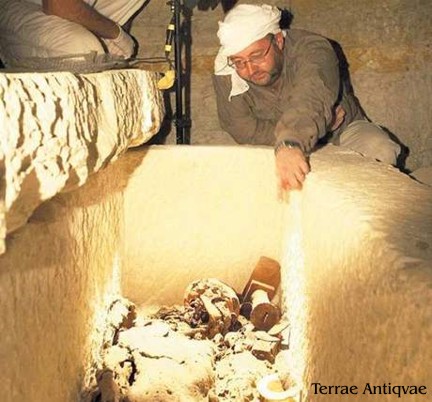
Foto: El profesor Miroslav Barta observa el sarcófago del sacerdote Neferinpu en la zona de las pirámides de Abusir. Foto por cortesía de iDNES.cz.
Los expertos checos, que trabajan en la región desde los años 70, descubrieron primero el complejo de tumbas de la familia de Neferinpu en 2006.
Un equipo de arqueólogos checos encontró una tumba intacta de hace 4.500 años en el área de las pirámides de Abusir, que pertenece a un dignatario egipcio, informó hoy el periódico Mlada Fronta Dnes.
Los egiptólogos descubrieron la entrada a la cámara de dos metros por cuatro a unos diez metros de profundidad, agrega la fuente.
De pronto usted está frente a la puerta de una tumba que no fue saqueada. Uno experimenta las sensaciones de Indiana Jones, indicó el diario citando al egiptólogo Miroslav Barta.
La tumba perteneció al sacerdote Neferinpu, que vivió y trabajó en el área de las pirámides en el siglo 24 a.C. o durante el antiguo reinado egipcio, señaló Barta.
Los expertos checos, que trabajan en la región desde los años 70, descubrieron primero el complejo de tumbas de la familia de Neferinpu en 2006.
La tumba, que contiene el sarcófago del sacerdote y muchos objetos de entierro, se había descubierto ya el pasado mes de noviembre, pero la noticia no se dio a conocer hasta no completar el registro de cada detalle.
Fuente: DPA, Praga, Rep. Checa / Milenio.com, 5 de enero de 2008
(2) Intact 4,500-year-old tomb found at Abusir
Czech archeologists found an intact 4,500-year-old tomb chamber of an Egyptian dignitary in the Abusir Pyramids area, the Mlada Fronta Dnes daily reported Saturday. The Egyptologists discovered the bricked-up entrance to the four- by-two-metre chamber at the bottom of a 10-metre-deep shaft, the report said.
And then you are standing at the door of a tomb (that was) not burglarized. One experiences feelings of Indiana Jones, the newspaper cited Egyptologist Miroslav Barta as saying.
The tomb chamber belonged to sacrificer Neferinpu who had lived and worked in the areas pyramids in the 24th Century BC, or during the Egyptian Old Kingdom era of pyramid-building, the archeologist said.
The Czech scientists, who have been working in the region since the 1970s, first discovered the tomb complex of Neferinpus family in 2006.
They located and examined the sacrificers burial chamber which contains his sarcophagus and scores of burial objects in November but did not make their find public until they had completed recording every detail.
The burial chamber, which belonged to the priest Neferinpu, was hidden at the bottom of a ten meter deep shaft and the entrance to it was walled-up. When the entrance to it was found, scientists slowly dismantled the wall and lowered themselves in...
A chamber of size roughly four by two meters was jammed with ancient artifacts. You musnt rub against anything, in order not to damage any discovery. Everything must be photographed, mapped, sketched and numbered.
It took three days, until November 12, at which point the scientists were able to open the lid of the sarcophagus. In it were lying the remains of the priest Neferínpu with decorations and jewelry. Afterwards they examined the remains and other objects, and only just now have made public the details of their unique discovery.
Source: Earth Times. January 7th, 2008
0 comentarios