Pescador griego encuentra estatua de la antigüedad en el mar
20060510105603-greciajinetebronce.jpg

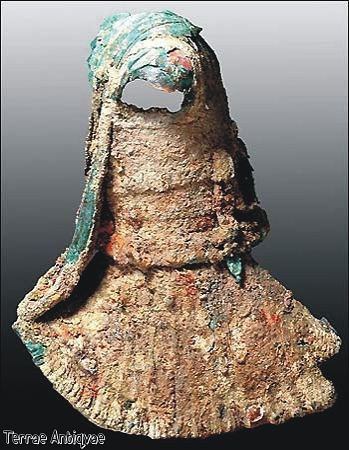
Foto: An undated picture provided by the Greek Culture Ministry on Monday, May 8, 2006 shows the torso from an ancient statue of a horseback soldier fished out of the Aegean Sea last week. The 1-meter (3-foot) fragment was found by a fisherman off the island of Kalymnos and handed over to authorities. (AP Photo/Culture Ministry)

Atenas- Un pescador de la isla Kalymnos, en el archipiélago griego Dodecaneso, realizó un hallazgo de gran valor en el mar: en una de sus redes apareció una estatua de bronce de un joven que data de la antigüedad, informaron hoy medios locales.

La estatua, de alrededor de un metro de largo, fue entregada por el pescador de 65 años al Departamento de Arqueología de la isla, que según éste es del siglo I después de Cristo.

“Su valor es por el momento incalculable”, dijo hoy la directora del departamento en declaraciones a la televisión griega. La estatua representa a un jinete. Sin embargo, el caballo no fue encontrado hasta ahora.

Fuente: DPA


(2) Fisherman Nets Ancient Statue in Greece

ATHENS, Greece - A Greek fisherman has handed over to authorities a large section of an ancient bronze statue brought up in his nets in the Aegean Sea, officials said on Monday.

The male torso was located last week near the eastern Aegean island of Kalymnos, the Culture Ministry said in an announcement.

The one-meter (3-foot) high find belonged to a statue of a horseback soldier, and would have been part of the cargo of an ancient ship that sank in the area. It was taken to Athens to be cleaned and dated.

Together with the torso, the fisherman brought up two small bronze pieces believed to belong to the statue, and a wine-jar from the ancient city of Knidos — in what is now Turkey — dating from the first century B.C, the ministry said.

The seas around Kalymnos are rich in ancient wrecks and have yielded several impressive finds in recent years, including a large female statue now exhibited at the National Archaeological Museum in Athens. The fisherman who netted it in 1995 earned a euro440,000 (US$558,000) reward from the Culture Ministry.

Other scattered pieces of bronze statues found in the area include a head, legs and arms, but it is unclear whether these could match the horseman’s torso.

Fuente: The Associated Press, 9 de mayo de 2006
Enlace: http://news.yahoo.com/s/ap/20060509/ap_on_sc/greece_ancient_
statue;_ylt=Aml7I0OprKj53.6Ebklc4YOs0NUE;
_ylu=X3oDMTA3MzV0MTdmBHNlYwM3NTM-

10/05/2006 10:56 Enlace permanente.

Comentarios » Ir a formulario

gravatar.comAutor: Nino

¿hay algun dato nuevo sobre este descubriemiento o alguna web con mas informacion sobre éste?
Gracias

Fecha: 19/05/2006 19:38.


Añadir un comentario

*

*
No será mostrado.


*

* Datos requeridos.


Terrae Antiqvae

RUSO-RUSSIAN  INGLÉS-ENGLISH  ALEMÁN-GERMAN  FRANCÉS-FRENCH  PORTUGUÉS-PORTUGUESE

Correo de contacto

Últimas 100 imágenes en Flickr de Terrae Antiqvae

Canal de Vídeos de Terrae Antiqvae

Anfiteatro Cartagena

¿Te gusta el proyecto para el anfiteatro romano de Cartagena?
Sí, muy acertado
Sí, está correcto
Bueno, no esta mal
No me gusta
Se puede hacer mejor
Muy mal
  
Free polls from Pollhost.com

Museo del Teatro Romano de Cartagena

¿Cómo clasificas el proyecto de Moneo para el Museo del Teatro Romano de Cartagena?
Excelente
Bueno
Regular
Malo
Horrible
  
Free polls from Pollhost.com


Teatro Sagunto

¿Debe volver el Teatro Romano de Sagunto a su estado anterior?
No, mejor dejarlo como está
Sí, hay que demoler lo añadido
Hay que buscar un acuerdo
  
Free polls from Pollhost.com

Recibe en tu

CORREO

las últimas novedades


Gentileza de FeedBurner

Suscríbete al Foro de Debate

Temas


Visitar Terrae Antiqvae - Arqueologia - Historia Antigua y Medieval


Tiempo y Hora en Madrid Click for Madrid, Spain Forecast

Archivos

Enlaces

picasaweblogoTeAn

Boletín de noticias diarias de Arqueología, Historia Antigua, Medieval y Patrimonio de Terrae Antiqvae publicadas en los medios

Arqueología Medieval.com - Universidad de Granada

Noticias de Arqueología Medieval. Universidad de Granada


Los nombres de los 20 días del mes en nahuatl son los siguientes: cipactli, ehécatl, calli, cuetzpallin, coatl, miquiztli, mazatl, tochtli, atl, itzcuintl, ozomatli, malinalli, acatl, ocelotl, cuauhtli, cozcauauhtli, ollin, tecpatl, quiauitl, xochitl. Foto de la derecha: "Piedra del Sol", Museo Nacional de México


Los 18 meses del calendario solar de 365 días, recibían los siguientes nombres: atlcahualo, tlacaxipehualiztli, tozoztontli, hueytozoztli, txcatl, etzalcualiztli, tecuilhuitontli, hueytecuilthuitli, tlaxochimaco, hueymiccailhuitl, ochpaniztli, pachtontli, hueypachtli, quecholli, panquetzaliztli, atemoztli, tititl, izcalli y nemontemi.


http://terraeantiqvae.blogia.com
Suscrí
bete a este blog. RSS 2.0 Este Blog ha sido creado con Blogia. Ver derechos de autor . Estadísticas. Admin. [Blogia colabora con iCities, 1001 relatos y el I Encuentro Rural de Blogs.]